

НАСТОЯЩИЙ МАТЕРИАЛ (ИНФОРМАЦИЯ) ПРОИЗВЕДЕН, РАСПРОСТРАНЕН И (ИЛИ) НАПРАВЛЕН ИНОСТРАННЫМ АГЕНТОМ ПРОЕКТОМ “ПОСЛЕ”, ЛИБО КАСАЕТСЯ ДЕЯТЕЛЬНОСТИ ИНОСТРАННОГО АГЕНТА ПРОЕКТА “ПОСЛЕ” 18+
The Non-Peaceful Atom
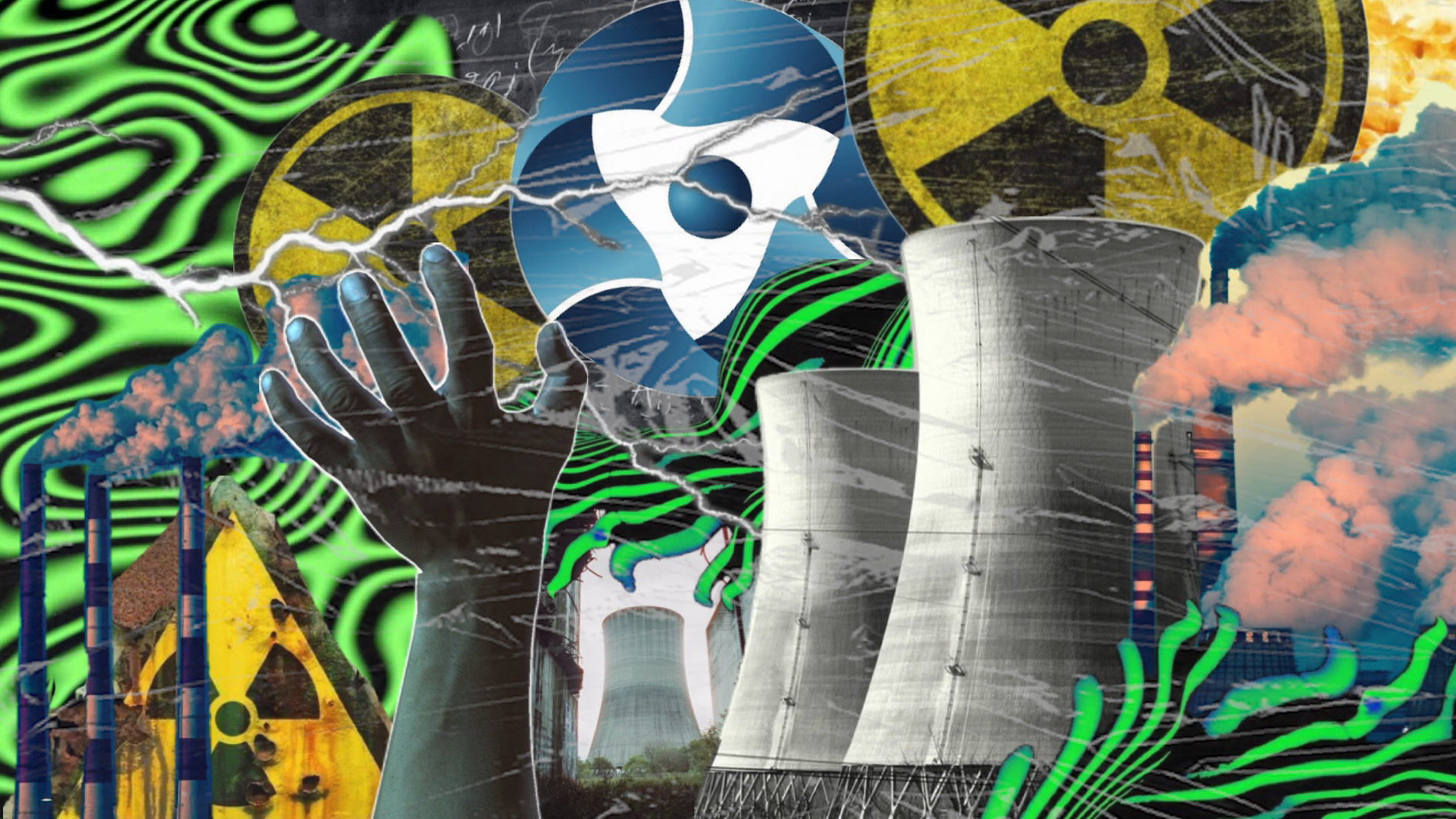
In what ways does Russia use nuclear energy as a strategic tool? Why have sanctions failed to end Europe’s dependence on the Russian nuclear industry? How is Rosatom involved in the war? Vladimir Slivyak, co-chair of the Eco-Defense group, answers these questions
As a strategic instrument of the Kremlin, Rosatom helps to create and entrench geopolitical dependencies. This dependence rests on the promotion of nuclear energy but has ramifications that extend far beyond the energy sector. Rosatom is both directly and indirectly involved in Russia’s war against Ukraine. In particular, Rosatom played a key role in Russia’s seizure of the Zaporizhzhia nuclear power plant and has offered to procure materials and components for Russian arms manufacturers under sanctions.
Nevertheless, the European nuclear industry continues to collaborate with Rosatom. For instance, Rosatom supplies uranium to Framatome’s ANF nuclear fuel plant in Lingen, Germany. Rosatom is also involved in expanding this facility, even though the German authorities have not yet approved such cooperation. If the Framatome-Rosatom project, which has been in development for over three years, goes ahead, the Russian regime will further strengthen its political influence in Western Europe despite the war in Ukraine.
Rosatom as a Civil-Military State Corporation
Rosatom is a state-owned corporation that operates in both the civilian and military spheres of nuclear energy and nuclear weapons. As the successor to Russia’s Ministry of Atomic Energy, Rosatom brings together over 350 companies engaged in nuclear activities. The corporation was created by a decree by Russian President Vladimir Putin in 2007.
Rosatom is directly owned by the Russian state. It is one of seven Russian “state corporations,” grouped together with Rostec, Roscosmos, and others. In 2012, former Prime Minister Dmitry Medvedev described Rosatom as a “corporation of a special kind” that not only seeks to expand its activities but also carries out “certain ministerial tasks.”
The corporation’s Supervisory Board is its main decision-making body. This board includes Sergey Kirienko, the deputy head of the Russian presidential administration, who is currently under sanctions from the EU, the UK, and the US, as well as Sergei Korolev, the first deputy director of the Federal Security Service of the Russian Federation (the main successor to the Soviet KGB). In relation to the war in Ukraine, Korolev has also been sanctioned by the EU, Australia, Canada, New Zealand, Switzerland, the UK, and Ukraine. The Supervisory Board also includes two Russian deputy prime ministers and two aides to President Vladimir Putin.
The European Parliament has repeatedly called for sanctions on Rosatom and for an end to all nuclear cooperation with Russia, including uranium imports and investments in critical infrastructure.
Participation in the War
Since Russia’s full-scale invasion of Ukraine began, Rosatom has been directly and indirectly involved in the war. According to a letter obtained by Ukrainian intelligence and published in the American press, Rosatom offered assistance to the Russian arms industry in securing goods needed for the production of weapons, tanks, and aircraft after that sector had been hit by international sanctions.
In his December 2022 address to Rosatom on the occasion of its 15th anniversary, President Vladimir Putin praised the corporation for its “enormous contribution to the development and deployment of advanced weapons systems and military equipment.”
In the early days of the invasion, Rosatom employees assisted Russian troops who occupied the Chernobyl exclusion zone in Ukraine. The Russian state corporation also facilitated the illegal seizure of Ukraine’s Zaporizhzhia Nuclear Power Plant. Rosatom employees have taken over key management positions at the facility. Following a decree by the Russian president, Rosatom created a new subsidiary specifically tasked with taking control of the plant.
In October 2023, Ukrainian nuclear operator Energoatom reported that the safety culture at the plant was deteriorating under Rosatom’s control. This deterioration included poorly performed work, insufficient staffing, and inadequate inspections. The company stated that these problems had led to significant damage to critical components of the Zaporizhzhya Nuclear Power Plant (NPP), including leaks in the radioactive primary coolant circuit. There is also credible evidence that Rosatom employees assisted the Russian military in selecting targets at the Zaporizhzhya NPP; they reportedly “helped direct Russian artillery fire at the plant.”
Rosatom as a Geopolitical Tool
Rosatom is a central player in the Russian regime’s “geopolitics.” The company’s goal is to make as many countries as possible dependent on Russian nuclear technology, services, and fuel. Rosatom purchases essential equipment for nuclear reactors under construction from European companies and supplies the EU with unenriched and enriched uranium, fuel, and other nuclear services. This cooperation helps fund the continuation of the war in Ukraine. It also locks Europe into dependence on Russian nuclear fuel and services, which ultimately translates into political influence.
Hungary is perhaps the clearest example. It is almost entirely dependent on Russia for nuclear energy services and has repeatedly blocked any attempt by the EU to impose sanctions on Rosatom. Russia controls the supply of nuclear fuel and the maintenance of existing Hungarian reactors and has provided a €10 billion loan for the construction of Paks-2 nuclear power plant. In addition, Siemens Energy and Framatome are providing key equipment and control systems for new Russian-made reactors in Hungary.
Rosatom states that it is currently building more than 30 new reactors in about a dozen countries. Last year, its subsidiaries exported approximately $2.2 billion worth of nuclear energy-related goods and materials. The Russian state budget covers more than 90% of the cost of Rosatom’s construction of new nuclear power plants around the world.
Rosatom has signed agreements with nearly 20 African countries to build nuclear power plants and research reactors. So far, however, only one plant is actually under construction: the Al Dabaa plant in Egypt. Rosatom has also purchased a uranium mine in Tanzania. A previous attempt to build a nuclear power plant in South Africa collapsed due to resistance from environmental activists. In South America, Rosatom is involved in smaller but still significant projects, such as a research reactor and lithium mining in Bolivia.
Despite Russia’s war in Ukraine, the French nuclear company Framatome continues to purchase uranium from Rosatom. Between 2022 to 2023, at least ten shipments of uranium went from Russia to the ANF nuclear fuel plant in Lingen, a Framatome subsidiary. According to the German government, these deliveries took place under two federal government licenses issued in September, November, and December 2022, as well as in April and May 2023. In August 2023, German authorities granted a new license authorizing up to 40 more shipments. Deliveries are still ongoing.
Prospects
In the four years since Russia’s full-scale invasion began, the EU has adopted nearly twenty packages of sanctions against the Russian economy and industry. Other countries, including the United States, the United Kingdom, Canada, and Japan, have also imposed sanctions. However, Russia has faced virtually no pressure in the field of nuclear energy, one of its key sectors with both civilian and military significance. On the contrary, Rosatom has expanded its operations and almost tripled its profits from trade with Western countries.
Europe’s dependence on Russia in the nuclear sphere is roughly comparable to its reliance on pipeline gas supplies before the war. First, Putin used gas deliveries as leverage over Europe, and then the Russian pipeline was destroyed in an act of sabotage. Without these developments, we would now likely be talking about the EU’s crippling dependence on Russia for both uranium and pipeline gas. In such a situation, it is reasonable to assume that Ukraine would not have been able to rely on the level of support it currently enjoys in Europe.
This dependence on Russian supplies did not arise by a happy accident for Moscow but from strategic steps the Russian regime has taken over the past 10–15 years. It is not known for certain whether Putin had been planning a full-scale war throughout this entire period. However, it is clear that making Europe’s economy as dependent as possible on Russian energy supplies was one of Moscow’s strategic priorities. Under this strategy, many European countries were meant to end up in the position Hungary finds itself in today.
As a result of the war in Ukraine, Europe’s dependence on Russian supplies has fallen sharply, though it has not disappeared. For instance, Germany, the EU’s largest economy, no longer relies on Russian pipeline gas. The fight against the “shadow fleet” transporting Putin’s oil to fund the war is under way, albeit with mixed results. Furthermore, Russian coal has been completely banned from Europe. Russia’s coal industry, one of the most profitable, is currently in a deep crisis — direct evidence that Russia has been unable to offset the consequences of Europe’s refusal to buy Russian coal. Even in the nuclear energy sector, the least affected by sanctions, there have been notable shifts. For instance, Finland has abandoned plans to build a major nuclear power plant with Russian involvement. In several cases, European companies have been unable to supply Rosatom with equipment for its projects in other countries.
Unfortunately, efforts to reduce dependence on Russian uranium are progressing extremely slowly, and there is still no clear timeline for this process. A full break with Russian uranium in the foreseeable future seems unlikely, especially if Hungary goes ahead with a new nuclear power plant project involving Rosatom. Russia is also trying to increase its liquefied natural gas exports to Europe. However, it now seems unlikely that European authorities will once again allow a situation in which Vladimir Putin can make their economies dependent on Russia.
Rosatom is arguably the biggest Russian thorn in Europe’s flesh today, and half-measures won’t remove it. A “surgical extraction” would cause severe and painful shocks to the economies — and, in turn, the politics — of several EU member states. The problem is not that the threat is underestimated; Europe understands it perfectly well. The issue is that freeing itself from this nuclear dependence would require enormous time and effort. The question is: will there be enough of either?

Мы намерены продолжать работу, но без вас нам не справиться
Ваша поддержка — это поддержка голосов против преступной войны, развязанной Россией в Украине. Это солидарность с теми, чей труд и политическая судьба нуждаются в огласке, а деятельность — в соратниках. Это выбор социальной и демократической альтернативы поверх государственных границ. И конечно, это помощь конкретным людям, которые работают над нашими материалами и нашей платформой.
Поддерживать нас не опасно. Мы следим за тем, как меняются практики передачи данных и законы, регулирующие финансовые операции. Мы полагаемся на легальные способы, которыми пользуются наши товарищи и коллеги по всему миру, включая Россию, Украину и республику Беларусь.
Мы рассчитываем на вашу поддержку!


To continue our work, we need your help!
Supporting Posle means supporting the voices against the criminal war unleashed by Russia in Ukraine. It is a way to express solidarity with people struggling against censorship, political repression, and social injustice. These activists, journalists, and writers, all those who oppose the criminal Putin’s regime, need new comrades in arms. Supporting us means opting for a social and democratic alternative beyond state borders. Naturally, it also means helping us prepare materials and maintain our online platform.
Donating to Posle is safe. We monitor changes in data transfer practices and Russian financial regulations. We use the same legal methods to transfer money as our comrades and colleagues worldwide, including Russia, Ukraine and Belarus.
We count on your support!




SUBSCRIBE
TO POSLE
Get our content first, stay in touch in case we are blocked

Еженедельная рассылка "После"
Получайте наши материалы первыми, оставайтесь на связи на случай блокировки


.svg)

