

НАСТОЯЩИЙ МАТЕРИАЛ (ИНФОРМАЦИЯ) ПРОИЗВЕДЕН, РАСПРОСТРАНЕН И (ИЛИ) НАПРАВЛЕН ИНОСТРАННЫМ АГЕНТОМ ПРОЕКТОМ “ПОСЛЕ”, ЛИБО КАСАЕТСЯ ДЕЯТЕЛЬНОСТИ ИНОСТРАННОГО АГЕНТА ПРОЕКТА “ПОСЛЕ” 18+
“We need to change our view of the Arctic as a frontier.” Part 1
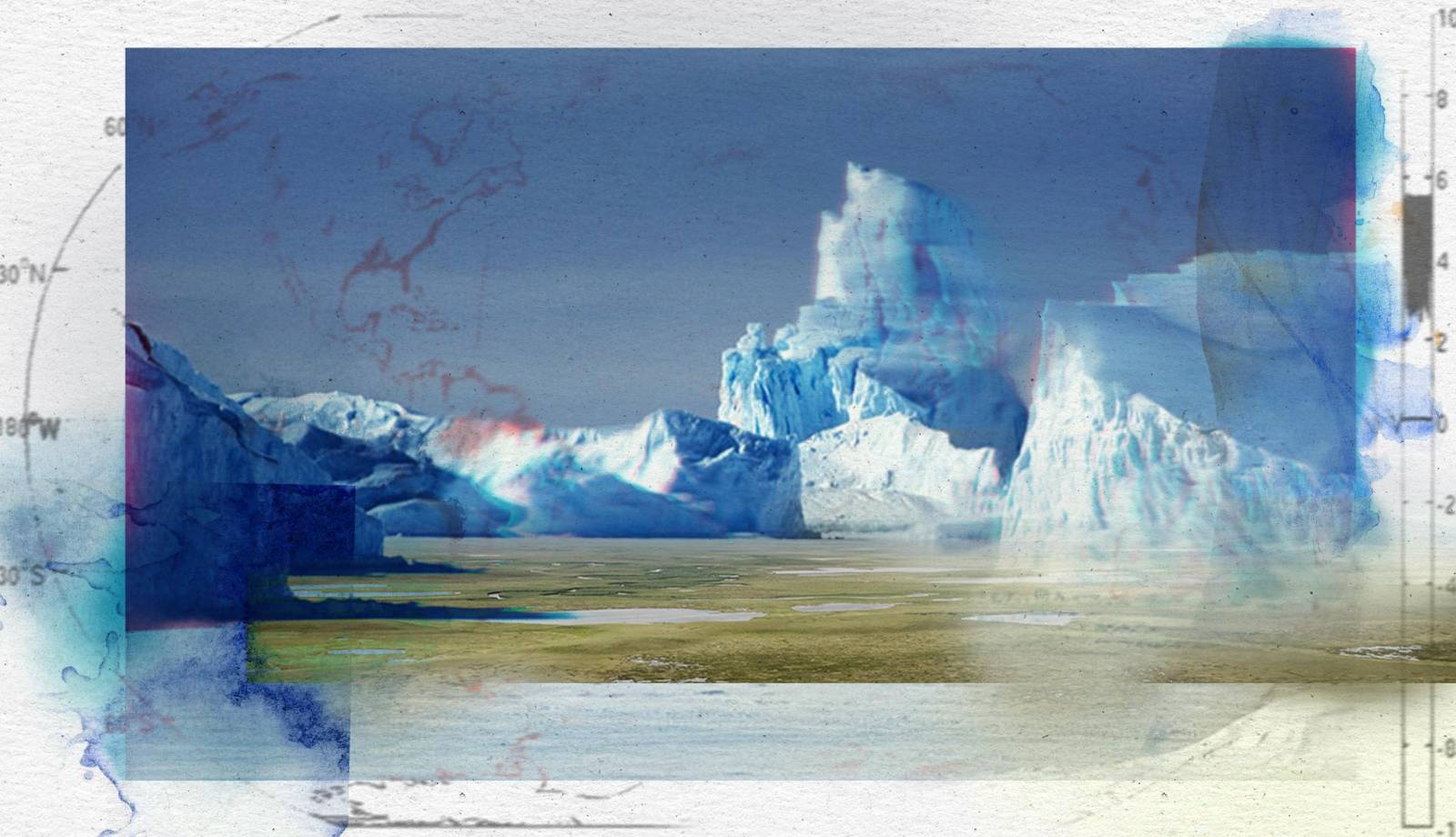
How is climate change transforming Arctic ecosystems? What does the Arctic mean in geopolitical terms? How do colonial narratives shape the way we perceive it? Researcher Vitaly Zemlyansky discusses these questions in depth
The second part of this interview on December 24, 2025 will explore how the war, sanctions, and the breakdown of international cooperation are reshaping environmental monitoring and Arctic policy
— What kind of research do you do?
— I’m a biogeographer, and I study Arctic biodiversity. My main focus is on the natural and human-driven factors that shape the distribution of Arctic vegetation. I’ve been working in and on the Arctic for over ten years now. During that time, I’ve taken part in more than ten expeditions across different parts of the region, mostly in Russia, from the Kola Peninsula in the west to the Republic of Sakha in the east, and to the Arctic Ocean islands. I’ve also conducted fieldwork in Alaska.Most of my work I’ve done on the Yamal-Nenets Autonomous District. I’ve worked on projects monitoring tundra ecosystems affected by human activity: assessing industrial and infrastructure impact, reindeer grazing, as well as the post-fire landscapes recovery.
Most of the studies are based on data collected through geobotanical surveys. The standard procedure is to establish a sample plot, typicallу 100 square meters, where all plant species are identified, from grasses and shrubs to mosses and lichens. We record the percentage of ground cover and the average height of each species. In some cases, we collect samples for chemical analysis or biomass estimations. Later, data from multiple plots are compared, statistically analyzed, and used to map vegetation communities.
— Why did you choose the Arctic as your main research focus? What makes it unique and important?
— Partly because of the romance of the Arctic: those vast, boundless landscapes, so unlike the ones I grew up with in central Russia. It’s a fascinating place for fieldwork. From the very beginning, I was struck by how fast and dramatically the Arctic is changing. Global warming there is developing three to four times faster than anywhere else on Earth. Arctic ecosystems are extremely fragile, even minor disturbances can lead to profound changes. Lichens, for example, grow very slowly; if damaged, they may take decades to recover.
The Arctic is also compelling from a socio-political perspective. It’s a vast, sparsely populated region with a deeply colonial history. Today, Europeans and their descendants make up much of the population, but Indigenous peoples still live there, many maintaining traditional lifestyles. Growing industrial activity often comes into conflict with those traditions, most visibly in the struggle between reindeer herding and resource extraction, like oil and gas.
Global warming in the Arctic is occurring three to four times faster than in the rest of the world. At the same time, Arctic ecosystems are extraordinarily fragile, even minor disturbances can trigger profound and lasting changes.
In the Arctic community, people often say: “What happens in the Arctic doesn’t stay in the Arctic.” The resources extracted there, Western Siberian gas, for instance, power not only Russia but also countries across the EU and as far as China. The melting of glaciers and permafrost has global repercussions that are already being felt. In many ways, the fate of the Arctic is determined far beyond its borders — by those who live thousands of miles away — while the people who actually inhabit the region have little power to influence what happens.
— Could you explain in more detail how global warming affects Arctic ecosystems?
— When we think of the Arctic, the first thing that comes to mind is cold. It’s a place where extreme cold defines everything, at least in winter. Of course, in parts of Siberia or North America, summers can be surprisingly hot, but in general, temperature is indeed the main limiting factor for plant growth. Now, as average temperatures rise, the functioning of entire ecosystems is shifting.
Permafrost is thawing, allowing plants to develop deeper root systems. Trees and shrubs that once struggled to grow in frozen soils are now taking root. More frequent droughts lead to wildfires, which in turn cause lasting changes in vegetation. Moss- and lichen-dominated tundra gives way to shrubs and grasslands. Southern species are migrating north into areas where they were never seen before.
Meanwhile, the sea ice of the Arctic Ocean is becoming less stable, shrinking year after year. On a broader scale, the Atlantic Meridional Overturning Circulation, which includes the Gulf Stream, may weaken, affecting the entire climate of Europe, the North Atlantic, and, of course, the Arctic itself.
A hundred years from now, the Arctic will look entirely different. Large parts of the tundra will likely give way to forests, and permafrost will retreat. But climate change is not a one-way process, it involves feedback loops that can accelerate or slow warming. Vegetation, for example, affects Earth’s heat balance and the carbon cycle. Mosses and lichens insulate permafrost from thawing; once they’re destroyed, melting accelerates, releasing carbon and methane trapped in the frozen ground. Vegetation also influences the planet’s reflectivity, how much sunlight is absorbed or reflected back into space. That, in turn, affects how much the whole planet warms.
That’s why it’s crucial to preserve ecosystems in their integrity, only then can we hope to slow the pace of climate change.
— How do climate change and melting ice affect the Arctic’s economic and geopolitical importance? What environmental risks do they bring?
— The full consequences of the Arctic becoming more accessible will unfold over the coming decades. This process cuts both ways: warming makes it easier to maintain a permanent human presence in the region, but at the same time, thawing permafrost is destroying the very infrastructure built upon it: bridges, roads, buildings. Repairs are constant and costly.
Many people argue that melting ice will open the Northern Sea Route, turning it into a rival to the Suez Canal and other global shipping lanes. While cargo traffic there is indeed increasing, its volume remains incomparable to the world’s major trade routes and is unlikely to catch up anytime soon. The reasons are both geopolitical and climatic: even in summer, Arctic ice persists and will continue to do so for some time.
On the one hand, rising temperatures make it easier to maintain year-round operations in the region. On the other, the thawing of permafrost is undermining the very infrastructure built upon it.
Still, interest in the Arctic — from both corporations and governments, especially Russia — is immense and only growing. After all, the Arctic is where NATO and Russia meet, and in times of rising geopolitical tension, both sides are investing in their presence there.
On the Svalbard archipelago, for example, the old Russian settlements of Barentsburg and Pyramiden, established in the early 20th century, still exists. They have been maintained for decades, first by the Soviet Union, then by Russia, for strategic reasons. Coal is still mined there. Economic motives intertwine with geopolitical calculation.
We tend to think of the Arctic through a colonial lens of “exploration”, a concept built on the idea of endless expansion. The Arctic is imagined as a frontier. You wouldn’t describe Germany or the Moscow region that way. Yet, in reality, the Arctic has already been largely “explored.”
A recent study by my colleagues showed that as of 2013, about five percent of the Arctic’s land area was illuminated by artificial light at night, an enormous territory of 840,000 square kilometers, roughly the size of France and Poland combined. Only about 15 percent of that light comes from settlements; the rest is from oil and gas extraction sites. Most of this light comes from Russia, especially the Khanty-Mansi, Yamal-Nenets, and Nenets regions, and from Norilsk, which glows brightly on satellite images. The pattern is uneven, but overall, these lights are expanding as new resource fields open while older ones go dark.
The Arctic is already well integrated into the global economy. What’s happening now is a deepening of that integration, and it’s taking a toll on ecosystems. Expanding infrastructure, for instance, reduces grazing lands used by Indigenous reindeer herders, like the Nenets. This can lead to overgrazing, as herding remains the foundation of their culture and livelihood. They must maintain and, as populations grow, increase the number of reindeer, but they’re forced to do so on shrinking pastures. Many of these areas are also vulnerable to wildfires and other forms of human impact that destroy yagel, the lichen that serves as the reindeer’s main winter food.
We’ve grown accustomed to thinking about the Arctic in terms of “development” or “exploration” — a colonial notion that already contains the idea of ongoing expansion.
Another problem I’ve already mentioned is wildfires. They are becoming more frequent, and now they’re spreading not only through the taiga, the region we usually imagine when talking about fires in Siberia, but also into the tundra, for instance, in the Republic of Sakha. Canada has been experiencing massive wildfires as well. This summer, smoke from Canadian fires drifted as far as Western Europe. Many remember the widely circulated photos of New York’s orange sky in 2023.
Of course, much of this damage could be mitigated—but only if we abandon the frontier ideology: the idea of the Arctic as a territory to be “developed,” a storehouse of resources to be extracted and sent elsewhere to the colonial centers. Unfortunately, the frontier mindset is enjoying a revival amid the global rightward political shift, a phenomenon not limited to Russia. Even in Norway, there is now an active debate about mining mineral-rich nodules on the ocean floor. This marks a troubling trend toward the weakening of environmental regulations.
It’s important to understand that Arctic ecosystems, those that appear “untouched”, are not simply unclaimed resources or “cheap nature” waiting to be appropriated and exploited. They are a pillar of planetary stability. Scientists use the term “ecosystem services” to translate into the language of industry and management a basic truth: humans and all living beings cannot survive without living wetlands, forests, tundra, and seas. They must be protected and left as they are, rather than reshaped for economic needs.
To achieve that, we need to preserve international cooperation and enforce common global standards that prevent a race to the bottom where corporations profit from weak environmental protections.

Мы намерены продолжать работу, но без вас нам не справиться
Ваша поддержка — это поддержка голосов против преступной войны, развязанной Россией в Украине. Это солидарность с теми, чей труд и политическая судьба нуждаются в огласке, а деятельность — в соратниках. Это выбор социальной и демократической альтернативы поверх государственных границ. И конечно, это помощь конкретным людям, которые работают над нашими материалами и нашей платформой.
Поддерживать нас не опасно. Мы следим за тем, как меняются практики передачи данных и законы, регулирующие финансовые операции. Мы полагаемся на легальные способы, которыми пользуются наши товарищи и коллеги по всему миру, включая Россию, Украину и республику Беларусь.
Мы рассчитываем на вашу поддержку!


To continue our work, we need your help!
Supporting Posle means supporting the voices against the criminal war unleashed by Russia in Ukraine. It is a way to express solidarity with people struggling against censorship, political repression, and social injustice. These activists, journalists, and writers, all those who oppose the criminal Putin’s regime, need new comrades in arms. Supporting us means opting for a social and democratic alternative beyond state borders. Naturally, it also means helping us prepare materials and maintain our online platform.
Donating to Posle is safe. We monitor changes in data transfer practices and Russian financial regulations. We use the same legal methods to transfer money as our comrades and colleagues worldwide, including Russia, Ukraine and Belarus.
We count on your support!


другие подкасты


«Это базис»: От Фридмана до Тиндера: тот самый неолиберализм

«Это базис»: Сначала институты, потом политика? Необходимость и достаточность институциональных реформ для России

«Базис-Повестка». Список Forbes: Хорошего человека олигарх:инями не назовут
SUBSCRIBE
TO POSLE
Get our content first, stay in touch in case we are blocked

Еженедельная рассылка "После"
Получайте наши материалы первыми, оставайтесь на связи на случай блокировки


.svg)

