

НАСТОЯЩИЙ МАТЕРИАЛ (ИНФОРМАЦИЯ) ПРОИЗВЕДЕН, РАСПРОСТРАНЕН И (ИЛИ) НАПРАВЛЕН ИНОСТРАННЫМ АГЕНТОМ ПРОЕКТОМ “ПОСЛЕ”, ЛИБО КАСАЕТСЯ ДЕЯТЕЛЬНОСТИ ИНОСТРАННОГО АГЕНТА ПРОЕКТА “ПОСЛЕ” 18+
What Remains of “Yabloko”
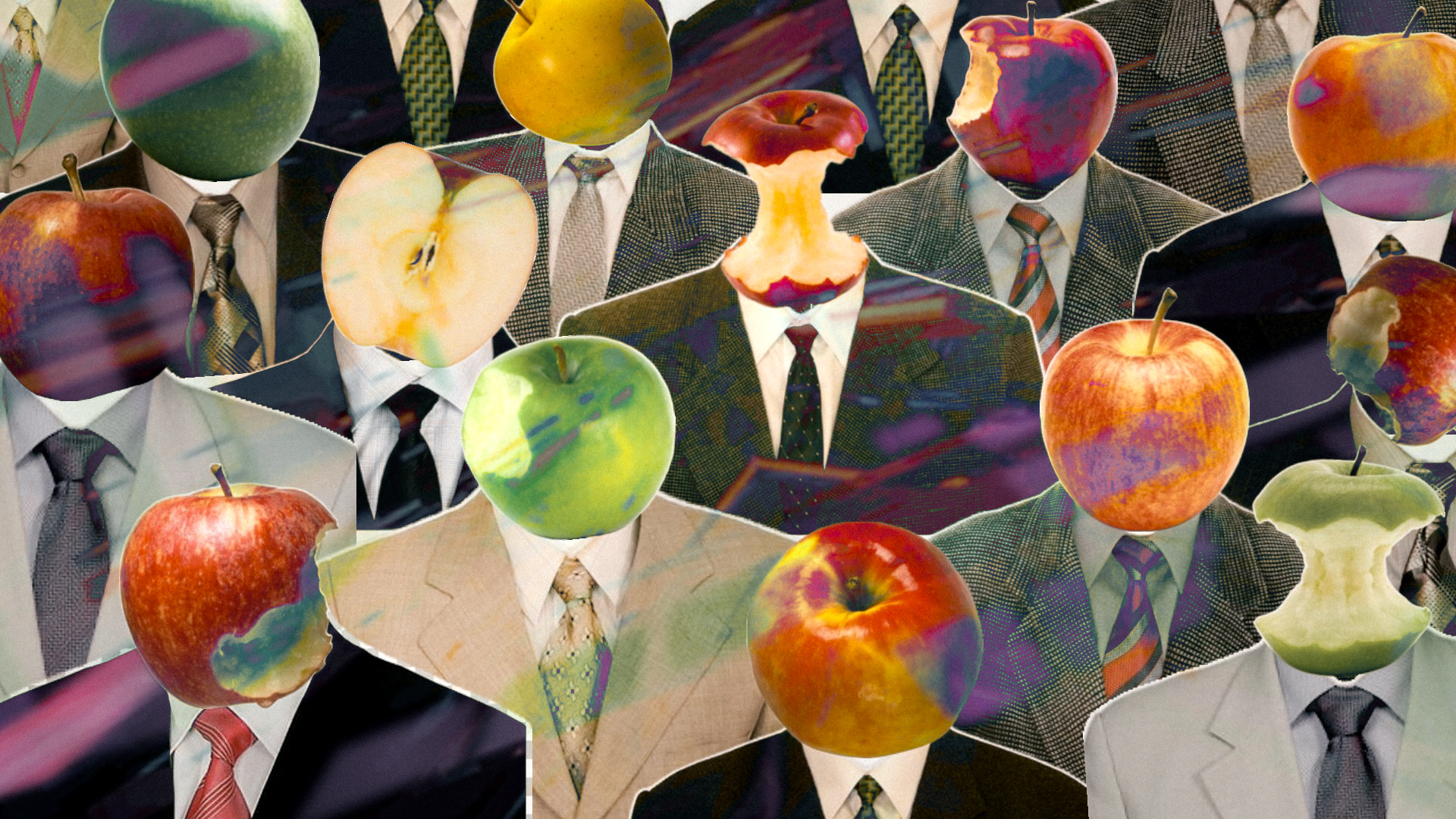
Why did the Russian authorities greenlight the anti-war “Yabloko” party for the parliamentary ballot, only to reverse the decision almost immediately? What place has “Yabloko” held in Russia’s political landscape since the 1990s, and what role does it play within the broader opposition movement? Activist and researcher Semyon Mikhailov explores these questions
In the 1990s, Yabloko was a prominent fixture on Russia’s political stage — a party boasting a professional parliamentary faction and robust regional branches. It was a force capable of vying for power, yet it seemed content to wait, almost blissfully, for its rivals in the liberal camp to implode. While storm clouds gathered over the country, oligarchs carved up state property, and the executive branch laid the groundwork for future authoritarianism, Yabloko stuck to issuing earnest democratic statements, contributing to the building and strengthening of political institutions, and supplying the regime with valuable specialists from its own ranks. The party’s subsequent history under Putin’s authoritarian rule has been a continuation of this exact same trajectory, as if the scenery changed but the script remained the same.
Russian Liberalism at a Crossroads
Yabloko’s history began on October 25, 1993, with the formation of a namesake electoral bloc for the upcoming parliamentary elections. At the time, Russia’s political system was just starting to take shape after nearly seventy years of one-party rule, unfolding amid rapidly shifting conditions and a severe socioeconomic crisis. Perestroika, the collapse of the Soviet Union, the shelling of the White House, and the failure of market reforms — which triggered hyperinflation and impoverished millions — drew the primary political fault line between those for and against the reforms.
Two competing factions immediately emerged within the pro-reform camp. At the helm were the “young reformers” — a tight-knit circle of technocratic economists who enthusiastically embraced the ideas of the Chicago School. By the standards of the Russian elite, Yegor Gaidar, Anatoly Chubais, Pyotr Aven, and Alfred Kokh truly were a remarkably young group of economists. They looked to Margaret Thatcher, Ronald Reagan, and even Augusto Pinochet as models of strong-willed leadership capable of overriding public resistance to push through harsh, unpopular reforms. Consequently, hyperinflation, the wiping out of public savings, and the impoverishment of millions were viewed as the inevitable price to pay for dismantling the totalitarian system.
The leaders and activists of the future Yabloko party emerged from a somewhat different milieu: the halls of the USSR Academy of Sciences and specialized analytical institutes. This was a fairly broad circle of Soviet experts and scholars who had been involved in economic management. Their political touchstones were European social democracy and social liberalism. The “500 Days” program — drafted back in 1990 by Grigory Yavlinsky, who would go on to become Yabloko’s definitive figure — envisioned liberalizing prices only after privatization had taken place and market mechanisms were firmly established. In theory, this approach was designed to prevent a sharp spike in prices, allowing citizens to use their life savings to acquire property instead.
Following the collapse of the USSR, the executive branch under Boris Yeltsin chose to execute market reforms using the “young reformers” model. By the 1993 parliamentary elections, those liberals who supported neither Gaidar’s team nor the shelling of the White House consolidated into an electoral bloc. The group was named after the surnames of its three key figures — Yavlinsky, Boldyrev, and Lukin — forming the acronym “YaBL,” which later evolved into “Yabloko” (the Russian word for “apple”).
Who were these figures at the time? Grigory Yavlinsky was an economist and the bloc’s primary public face. Yuri Boldyrev was the former Chief State Inspector under the Yeltsin administration, widely known as a fierce anti-corruption crusader. Vladimir Lukin was a seasoned diplomat and Russia’s former ambassador to the United States, lending the bloc international gravitas. Alongside its individual leaders and EPIcenter — the think tank founded by Yavlinsky — the bloc’s institutional co-founders included three political parties born from the democratic wave of the late 1980s: the Republican Party of the Russian Federation, the Social Democratic Party of Russia (whose left wing soon splintered off), and the Russian Christian Democratic Union.
A Government-in-Waiting
In the elections of December 12, 1993, the YBL bloc won 7.86% of the vote and 27 out of 450 seats. By the 1995 elections, the alliance had fully transitioned into the Yabloko public movement. In the December 1995 elections to the second State Duma, it even improved its seat count, securing 46 mandates with 6.89% of the vote.
In the 1990s, parliament was still a genuine forum for debate, and Yabloko carved out a secure electoral niche by drawing on a broad segment of the post-Soviet intelligentsia — those who were dissatisfied with the harsh course of Gaidar and Yeltsin but felt no nostalgia for the USSR. The party positioned itself as a “government-in-waiting”: honest, intellectual, and untainted by corruption scandals or violent crackdowns. At the same time, the Yabloko faction played a prominent role in shaping Russia’s new legislation, from budget and tax laws to regulations on local self-government and consumer protection. Paradoxically, a significant portion of the legal framework of the modern Russian state was crafted by an opposition party that was never allowed into government.
From the very outset of the First Chechen War (1994–1996), Yabloko took a staunch anti-war stance, demanding a cessation of hostilities, the withdrawal of troops, and the initiation of negotiations. The party also accused Gaidar’s team of enabling the war through their tacit complicity with Yeltsin’s growing authoritarianism after 1993.
In 1995, Yabloko condemned the massive “loans-for-shares” auction scheme, in which state-owned stakes in industrial and resource giants (Norilsk Nickel, Yukos, Sibneft, Lukoil, and others) were sold off for a pittance to Russian bankers to plug a bankrupt budget. It was precisely then, in 1995, that the inner circle of Russian oligarchs emerged, acquiring vast property in exchange for providing political backing to Yeltsin.
To address the budget deficit, the party proposed a bold plan of its own: attracting foreign investment into oil and gas extraction under concession terms. In the course of the unsuccessful struggle over this legislation, the party lost one of its founders, Yuri Boldyrev. He viewed the bill as a colonial scheme that would hand the country’s mineral wealth over to transnational corporations, and subsequently left the party. Boldyrev soon became deputy chairman of the Accounts Chamber of the Russian Federation, where he focused on combating corruption, remaining in the post until 2001.
In the 1996 presidential election, Yabloko refused to participate in the famous “Vote or Lose” campaign, which framed Yeltsin as the sole alternative to Zyuganov, who was supposedly poised to plunge the country back into the inferno of communism. Yavlinsky refused to drop out of the race, declaring that a Yeltsin victory achieved through manipulation and loans-for-shares auctions would drive the country toward authoritarian degeneration. In the first round, he finished fourth with 7.34% of the vote — marking the absolute peak of Yabloko’s electoral success.
Subsequently, the executive branch repeatedly offered the party integration into power structures and ministerial posts. Yavlinsky’s position remained categorical: Yabloko would only delegate its specialists to the cabinet on the condition that the overall economic course was changed and a coalition government was formed.
The story of Mikhail Zadornov, who chaired the State Duma’s Budget Committee, is telling here. In November 1997, he accepted an offer to head the Ministry of Finance in Viktor Chernomyrdin’s government and was forced to leave Yabloko. He remained in the post until 1999, after which he left party politics for good to enter the systemic civil service and big business, eventually becoming one of the top managers in the state banking sector during the Putin era. In 1998, Yabloko member Oksana Dmitrieva became minister of labor in Sergei Kiriyenko’s government and was likewise expelled from the party.
On December 19, 1999, in the elections to the third State Duma, Yabloko received 5.93% of the vote and only 20 seats — 25 fewer than in the previous convocation. Just 12 days after the elections, on December 31, 1999, Boris Yeltsin resigned, handing over the powers of acting president to Vladimir Putin.
The Systemic Opposition
Following Putin’s rise to power in 2000, the country’s political architecture began to shift rapidly, yet Yabloko continued to position itself as a principled, systemic opposition. Unlike the liberals from the former Chubais–Gaidar clique, Yabloko openly criticized the encroaching authoritarianism from the very beginning. In the intra-elite conflict that erupted at the dawn of the Putin era, the party sided with Mikhail Khodorkovsky. His arrest in October 2003, just two months before the parliamentary elections, sent an unmistakable signal to all of big business: any funding directed toward Yabloko, or the opposition at large, would be treated as a hostile act against the state.
In the 2003 elections, Yabloko failed to clear the parliamentary threshold for the first time, securing 4.3% of the vote and falling short of the 5% barrier. While there is little doubt that this outcome was driven by ballot stuffing and the authorities’ deployment of administrative resources, the party’s electoral star had already begun to wane after 1996. The general public saw little difference between the various factions of reformers, who moreover expended enormous energy tearing one another apart, while the socio-economic upheavals of the 1990s had fostered a powerful demand for stability.
Nevertheless, the party continued its work in regional assemblies and contributed to building functioning state institutions. In 2004, Putin appointed Yabloko’s deputy chairman, Igor Artemyev, as head of the Federal Antimonopoly Service (FAS). Under his leadership, which lasted until 2020, the FAS was transformed into one of the most modern and effective regulatory agencies in the country. Throughout this period, Artemyev officially retained his party membership and even sat on its political committee. Vladimir Lukin, whose name supplied the third letter of the “YBL” acronym, was elected Human Rights Commissioner in 2004.
Having lost its parliamentary seats, however, Yabloko was transformed from a prominent “systemic player” into a party pushed to the margins of the political system. While Grigory Yavlinsky sought to keep the party within the bounds of “civilized legalism” — filing lawsuits and participating in occasional roundtables while waiting for the system to return to the rule of law — an idea was ripening within the party itself, and especially among its youth wing, that it was time to shift toward non-systemic resistance.
One of the key figures in this process was Ilya Yashin, then a young activist who had joined the party in 2000, headed its Moscow youth organization since 2001, and became co-chair of the federal Youth Yabloko in 2005. Proponents of reform within the party called for pressuring the authorities through mass street protests, advocating for a united front with other opposition forces regardless of their ideological affiliation. In 2008, following disastrous State Duma elections where the party took just 1.59% of the vote, a fierce battle over Yabloko’s future erupted at its national congress. Yavlinsky voluntarily stepped down as chairman, and Sergei Mitrokhin — head of the Moscow branch and a representative of the moderate wing — was elected in his stead. His primary challenger was Maxim Reznik, head of the St. Petersburg chapter.
Soon after their defeat at the congress, Yashin and Reznik took an active part in founding the opposition movement “Solidarity,” which brought together a disparate array of opposition figures — including sidelined architects of the Yeltsin and early Putin regimes, such as Boris Nemtsov. Ultimately, Yashin was expelled from Yabloko; many prominent activists left or were purged along with him, as the party made a definitive decision to remain strictly within a legalist framework and avoid provoking the authorities under any circumstances.
Another prominent Russian opposition figure expelled from Yabloko around that time was Alexei Navalny. Like Yashin, he had joined the party as a young man in 2000 and built an impressive career; by 2007, he was serving as deputy to Sergei Mitrokhin in the Moscow branch and sat on the party’s Federal Council. He soon concluded that Yabloko’s traditional, classical liberalism was isolating the party from the broader public, and proposed a strategy: the democratic movement needed to join forces with civic nationalism. He was ultimately expelled from the party following his personal participation in the far-right “Russian March.”
Following mass electoral fraud in the 2011 elections to the sixth State Duma, Russia erupted in widespread protests, marking the largest surge of civic activity in the country since the 1990s. Officially, the party received 3.43% of the vote; while this fell short of the 5% threshold, it was enough to restore its eligibility for state funding. Yabloko took an active part in the protest movement: its observers documented voting violations, party activists joined mass demonstrations, and the party staged rallies of its own.
Yet the nature of Yabloko’s participation differed substantially from the strategy of the non-systemic opposition that was then taking shape. The party leadership did not call for an election boycott or for shifting the focus of the political struggle exclusively to the streets; on the contrary, Yavlinsky insisted on combining protests with legal challenges to voting violations, election monitoring, and continued electoral participation. This was where the central contradiction that would increasingly divide Yabloko from the burgeoning non-systemic opposition first manifested itself: the party was prepared to protest against electoral fraud, but sought to do so strictly within the bounds of legal and electoral politics. Many leaders of the liberal opposition flank, such as Navalny and Yashin, by contrast gradually staked everything on mass street mobilization, accusing Yabloko of excessive caution and of playing the role of a token opposition.
In response to the annexation of Crimea and the outbreak of the war against Ukraine in 2014, Yabloko, as was its custom, took a virtually irreproachable political stance. In March 2014, the party’s political committee adopted a resolution that explicitly characterized the events as an annexation, a violation of Russia’s international legal obligations, and warmongering.
The party approached the 2016 parliamentary elections with an ambitious strategy to form a broad democratic coalition based on a peaceful settlement with Ukraine and a return to a European path of development. Yet, despite its efforts to present itself as an alternative to the “Crimean consensus,” Yabloko officially secured just 1.99% of the vote, once again losing its eligibility for state funding.
And yet, the party remained a magnet for whatever systemic opposition activity was still possible. Thus, in the September 2017 Moscow municipal elections, Yabloko unexpectedly found itself at the heart of a locally successful opposition campaign. Former Duma deputy Dmitry Gudkov and political strategist Maxim Katz built a fundraising and organizational platform for activists to contest the municipal races. Because Yabloko held a parliamentary exemption allowing it to nominate candidates at the municipal level without collecting signatures, the vast majority of the project’s candidates registered under its banner. The opposition ultimately secured 176 seats across 51 Moscow districts (compared to just 25 seats for the party in the 2012 elections), and Yabloko formed an absolute majority on the district councils in six of the capital’s neighborhoods.
Within this success, however, the same fundamental conflict resurfaced: while a segment of activists sought to push the party onto more radical, non-systemic rails, the leadership remained determined to preserve its moderate, systemic course. Dmitry Gudkov soon distanced himself from the party, and Maxim Katz was expelled along with his supporters.
In March 2018, Grigory Yavlinsky ran for President of the Russian Federation for the fourth time in his career, campaigning on an anti-war and human rights platform. According to official Central Election Commission (CEC) data, he secured 1.05% of the vote, finishing in fifth place.
In the 2019 Moscow City Duma elections, following the opposition’s successes in the 2017 municipal elections, the authorities chose to simply bar most opposition candidates from running. This triggered a wave of street protests that were harshly suppressed by the police, while Yabloko continued to defend its candidates through the courts. Ultimately, only four Yabloko candidates secured seats; thanks to the “Smart Voting” strategy, all of them won their respective districts. In total, the opposition captured 20 out of 45 seats (13 for the Communist Party, 4 for Yabloko, and 3 for A Just Russia), depriving United Russia of its qualified majority.
Yavlinsky, however, later spoke out sharply against both Smart Voting and Navalny personally. In February 2021, as the final pre-war acts of the dramatic standoff between the non-systemic opposition and a regime preparing for invasion were unfolding, he published a highly controversial article, “Without Putinism and Populism,” in which he directly attacked Navalny — who was then imprisoned following his return to Russia. The opposition leader’s supporters were systematically purged from the party, and his political philosophy was labeled “modern-day Bolshevism.”
For twenty years, Putin’s strategists constructed a system of “managed democracy” in Russia, where executive branch decisions are carried out without question, yet are still funneled through formal democratic institutions. Throughout all those years, Yabloko never once sullied itself, it seems, with a single overt compromise with the regime — but it also did everything in its power to avoid stepping outside the boundaries set for it from above. The most unruly and hot-headed activists were systematically expelled; honest democrats were permitted to continue working at various local levels for the good of their towns and regions; and a place was even found in state structures for certain party members. Shut out of parliament, the party nevertheless maintained its network of regional branches, its deputies in regional legislatures, and its core base of supporters.
The New Reality
With the start of Russia’s full-scale invasion of Ukraine — without exaggeration, a historic turning point after which neither Russia nor the world will ever be the same — Yabloko once again came out with a categorical condemnation of the decision to launch the “special military operation,” calling for an immediate ceasefire and peace talks. A swift victory failed to materialize; instead, the screws began to tighten rapidly across the country, and what had only recently been permitted within the remnants of Russian democracy was transformed into a crime.
Yabloko did not participate in unsanctioned street protests against the war, nor did it call for demonstrations or emigration. Once again, the Yabloko leadership did everything in its power to avoid crossing the new “red lines” and to sustain its political work within a legal field that had ultimately shriveled to almost nothing. Party bodies issued anti-war statements and organized lackluster campaigns; Yabloko’s remaining deputies in municipal and regional assemblies put forward statements and appeals, frequently relying on formal legal loopholes.
Consequently, unlike hundreds of anti-war and democratic organizations, Yabloko was not banned, yet its activists did not escape repression. The new rules were entirely unwritten; it remained unclear what could still be said or done — and in what format — and what was now strictly forbidden. The blow fell primarily on the most prominent and uncompromising figures: those who still did not shun contact with the non-systemic opposition and refused to shy away from speaking out boldly and openly.
Criminal cases were initiated against a whole host of key regional activists and members of the party’s Federal Bureau under charges that have become standard for the Russian opposition: “discrediting the Russian army” and “displaying extremist symbols.” Actual prison sentences were handed down to Khakassia journalist Mikhail Afanasyev, the head of the Kamchatka Yabloko branch Vladimir Yefimov, St. Petersburg activist Vasily Neustroev, and the party’s deputy chairman Maxim Kruglov (sentenced to seven years in a penal colony), among others. On August 17, 2026, literally on the eve of the State Duma elections, one of the party’s core leaders, Lev Shlosberg, was handed a staggering sentence of 11 years and one month in a maximum-security penal colony.
The Russian Ministry of Justice has added the party’s primary spokespeople and intellectual leaders to its register of “foreign agents.” The designations include deputy chairmen Lev Shlosberg and Boris Vishnevsky, human rights defender Svetlana Gannushkina, Novaya Gazeta editor and Nobel Peace Prize laureate Dmitry Muratov, as well as the heads of several regional branches — totaling 13 people in all.
The persecution has affected five of the party’s six deputy chairmen. Furthermore, party offices have been subjected to police searches, while a number of activists have been placed under administrative arrest or heavily fined.
And so, more than four years after the outbreak of the full-scale war, the time has come for new parliamentary elections in Russia, to be held on September 18–20, 2026. From the outset, there was never any intrigue, nor was any expected: the parliamentary seats have been roughly allocated in advance, and the winner is already known. All the more unexpected, then, was the formal registration and admission of Yabloko — a party that since 2014 has consistently opposed the annexation of Crimea and Russia’s intervention in the Donbas war, while advocating for an immediate ceasefire and peace talks.
The program on which Yabloko entered the elections was concise in the extreme — totaling just 42 words — and came down to three burning issues: peace, the release of political prisoners, and the unblocking of Telegram. This straightforward platform undoubtedly reflects the desires and hopes of millions of Russians; despite systematic pressure and a near-total media blackout, the party was positioned to make, at the very least, a triumphant return to parliament. According to sociological estimates, Yabloko’s polling numbers already stood at 6% in July and surged sharply following its admission to the ballot. Such a success for an anti-war party would have served as convincing evidence that the Russian public’s attitude toward the war is far from unanimous, effectively legitimizing the anti-war agenda — and that is precisely what the Russian authorities cannot allow.
Yabloko’s election campaign turned out to be vibrant but brief, lasting a mere 12 days. On August 10, 2026, the Supreme Court of Russia annulled the registration of the party’s federal list following a lawsuit by the pro-Kremlin party, Rodina. Yet, those 12 days were, without question, a genuine breath of fresh air for a Russian public worn down by relentless pro-war propaganda.
The party responded with a statement decrying political pressure and vowing to contest the ruling. Meanwhile, most of Yabloko’s candidates in single-member districts were also stripped of their ballot access, as the courts, in parallel, systematically annulled the registration of Yabloko’s lists across the majority of regional parliaments. Wherever the party might still have mounted even a semblance of a compelling anti-war campaign ahead of the elections, it was stripped of the opportunity entirely.
When Russian oligarchic capitalism was born in agony and blood in the 1990s, Yabloko’s liberals adopted the wait-and-see posture of the “man in the white coat» — the bystander who keeps his hands clean while others do the dirty work. While supporting the general vector of reform, they criticized — as a rule, entirely justly — literally every step the government took from a principled, humanist position that was not indifferent to the plight of the poor. Meanwhile, the party that had worked so diligently to shape the legal framework of the new country was gradually pushed to the margins of the political system. As the political space began to contract under Putin, there was no room left in major parliamentary politics for a Western-oriented, liberal-minded Yabloko; yet, it was permitted to retain its structures and contest the regime within strictly defined legal boundaries. In a sense, the party served as a talent incubator for both state structures and the systemic opposition. February 2022 and the subsequent crackdowns changed nothing in the party line: persecutions, bans, and disqualifications from the ballot continue to be contested in courts whose verdicts are a foregone conclusion.
Following the 2026 elections, the party that for decades strove never to venture outside the established legal field risks losing its last remaining influence at the regional level and shriveling into an entirely harmless entity on the political periphery operating strictly within prescribed boundaries, is no longer tolerated. The regime, having mutated into a retrograde, aggressive monster, is here for the long haul, and no return to pre-war normality is on the horizon. On the other hand, the very necessity of such bans proves that Russian civil society is still alive, seizing every opportunity to resist, and that a flicker of hope for change still remains.

Мы намерены продолжать работу, но без вас нам не справиться
Ваша поддержка — это поддержка голосов против преступной войны, развязанной Россией в Украине. Это солидарность с теми, чей труд и политическая судьба нуждаются в огласке, а деятельность — в соратниках. Это выбор социальной и демократической альтернативы поверх государственных границ. И конечно, это помощь конкретным людям, которые работают над нашими материалами и нашей платформой.
Поддерживать нас не опасно. Мы следим за тем, как меняются практики передачи данных и законы, регулирующие финансовые операции. Мы полагаемся на легальные способы, которыми пользуются наши товарищи и коллеги по всему миру, включая Россию, Украину и республику Беларусь.
Мы рассчитываем на вашу поддержку!


To continue our work, we need your help!
Supporting Posle means supporting the voices against the criminal war unleashed by Russia in Ukraine. It is a way to express solidarity with people struggling against censorship, political repression, and social injustice. These activists, journalists, and writers, all those who oppose the criminal Putin’s regime, need new comrades in arms. Supporting us means opting for a social and democratic alternative beyond state borders. Naturally, it also means helping us prepare materials and maintain our online platform.
Donating to Posle is safe. We monitor changes in data transfer practices and Russian financial regulations. We use the same legal methods to transfer money as our comrades and colleagues worldwide, including Russia, Ukraine and Belarus.
We count on your support!


другие подкасты


«Это Базис». Как нас подводит здравый смысл и что об этом говорил Грамши

«Это базис». Всё, что вы хотели знать о реновации

«Это базис». Спаси и сохрани. Религия в современном обществе
SUBSCRIBE
TO POSLE
Get our content first, stay in touch in case we are blocked

Еженедельная рассылка "После"
Получайте наши материалы первыми, оставайтесь на связи на случай блокировки


.svg)

