

НАСТОЯЩИЙ МАТЕРИАЛ (ИНФОРМАЦИЯ) ПРОИЗВЕДЕН, РАСПРОСТРАНЕН И (ИЛИ) НАПРАВЛЕН ИНОСТРАННЫМ АГЕНТОМ ПРОЕКТОМ “ПОСЛЕ”, ЛИБО КАСАЕТСЯ ДЕЯТЕЛЬНОСТИ ИНОСТРАННОГО АГЕНТА ПРОЕКТА “ПОСЛЕ” 18+
Politics, Work, and Care in Women’s Exile
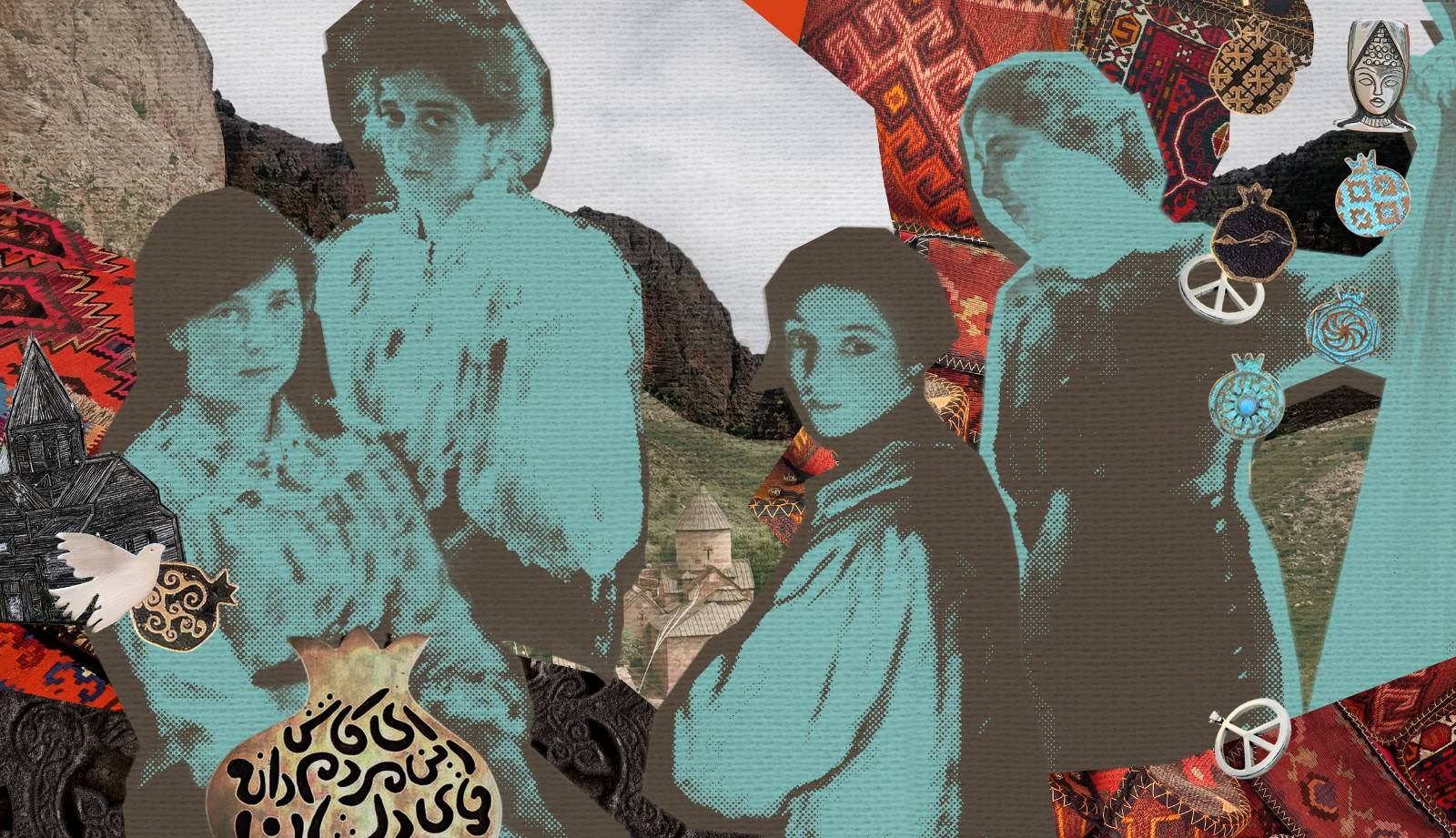
Why has leaving Russia become a deeply political choice for so many women? What is the true cost of that decision — economically, practically, and emotionally? And how can the exact same country offer such vastly different experiences from one person to the next? Journalist Kristina Kartushina shares the stories of four women who rebuilt their lives in Georgia
Russia’s full-scale invasion of Ukraine on February 24, 2022, triggered one of the largest waves of emigration in the country’s modern history. Yet reliable data on this exodus remains scarce, and even less is known about how many of those who left were women or why they chose to leave.
Official data from host nations suggests that as many as 800,000 people fled Russia in 2022. Several post-Soviet states became the primary destinations for anti-war Russians, largely due to their liberal entry requirements. Many of these former Soviet republics also still have sizable Russian-speaking populations, although that number has been steadily declining. Public attitudes toward Russian migrants, however, vary significantly from country to country. While many Russians reported feeling relatively safe in Armenia, they were met with far greater suspicion in Georgia, where memories of the Soviet past and the 2008 Russo-Georgian War continue to shape public opinion.
Women in Russia are not subject to conscription, so those who leave the country on their own are usually driven by political conviction alone rather than by the immediate threat of being drafted into military service. The prevailing stereotype of a female émigré from Russia’s latest wave depicts a middle-class professional with stable remote employment who remains politically and socially disengaged after relocating. Another common assumption is that women typically emigrate alongside a financially secure partner. Such generalizations, however, flatten the far more complex gendered realities of post-2022 Russian emigration.
The challenges women encounter in exile are often distinctly gendered. Compared with men, women tend to be more economically vulnerable, face greater obstacles in the labor market, and have narrower professional opportunities. For many, migration was forced and unplanned — and women are more likely than men to fear unemployment and the loss of financial security. This is partly because women disproportionately shoulder responsibility for the most vulnerable members of the family: children, elderly or ill relatives, even pets. What for a man may be a professional setback can quickly become a financial disaster for a woman.
Across many areas of public life, women also tend to be more politically active than men. They are more often involved in volunteer work and grassroots initiatives, and in countries with stronger traditions of gender equality they vote more often. The pattern holds in exile as well: research suggests that Russian women abroad have been more politically active than their male counterparts and more engaged in the life of local communities.
Yet the experiences of young women who left Russia after the outbreak of war resist any single narrative. For some, the defining challenge is political persecution; for others, it is ethnic and linguistic barriers, economic precarity, or cultural norms that dictate gender roles. The cases that follow illustrate the range of these experiences. They are not statistically representative, but they are telling: each case highlights structural problems that often disappear behind broad generalizations. All unfold in the same country — Georgia — where the same migration landscape turns a different face each time: political, ethnic, economic, cultural.
Politics
Back in Russia, Polina (30) regularly attended anti-war demonstrations and participated in the now-famous supermarket price-tag protest, whose best-known participant, Sasha Skochilenko, was soon arrested and later sentenced to seven years in prison. Shortly before Russia launched its full-scale invasion, the independent media outlet where Polina had worked for several years was blocked inside Russia. It later shut down and was eventually designated an “undesirable organization” by the Russian government — a legal status that effectively prohibits an organization from operating in the country and exposes both employees and former staff members to administrative penalties and, in some cases, criminal prosecution. Against this backdrop, Polina decided to move into what seemed at the time to be a more stable profession, taking an editing job in the tech industry. But the hoped-for stability never came: the company’s management changed completely, and she lost her job once again.
As the political climate in Russia deteriorated during the first months of the war, remaining in the country became increasingly dangerous. Five months after the invasion, despite having neither stable employment nor savings, Polina decided to leave. A family friend offered her a place to stay in Georgia, allowing her to relocate. Within two weeks Polina had rented a place of her own and settled into a country where an active community of newly arrived exiles — opposed to the war and to repression — was taking shape, organizing human rights and political events as well as volunteer projects. It was during this period that she returned to political journalism, despite Georgia’s own difficult political situation.
Some time after Polina emigrated, her grandmother died in Russia. Because returning home carried a serious risk of criminal prosecution, she could not even attend the funeral. She weighed the risks of a trip for a long time but in the end could not bring herself to go, even for a few days.
Polina’s situation is far from unique. Many Russian émigrés cannot return home even briefly for fear of persecution — and in Russia this applies not only to opposition politicians, journalists, and activists but sometimes even to ordinary citizens who have spent long periods abroad.
Journalism remains one of the world’s most dangerous professions. While war correspondents and reporters covering protests face the greatest physical risks, political censorship creates dangers of its own. Independent journalists are routinely subjected to legal harassment as well as extrajudicial pressure, including threats, assaults, and, in some cases, assassination. Over the past year, Georgia has fallen 21 places in the global Press Freedom Index, ranking 135th out of 180 countries in 2026; Russia ranks 172nd.
Over the past four years, Georgia’s political landscape has also become markedly more restrictive. The ruling Georgian Dream party has embraced cultural conservatism while distancing the country from the European Union. Following disputed parliamentary elections in 2024, the violent suppression of protests with water cannons and tear gas after the passage of the foreign influence law, and continued crackdowns on the political opposition, the government has also introduced legislation making everyday life and professional activity increasingly difficult for immigrants.
Border officials, moreover, can now refuse reentry to foreigners legally residing in Georgia who leave the country even briefly — for a week-long business trip, for example. Valid documents, bank accounts, a rental contract, even formal employment count for nothing here; refusals are justified with the officials’ studiously vague “other reasons.” There are grounds to believe that, at least where Russian citizens are concerned, some of these decisions are politically motivated.
At the same time, Georgian authorities have increasingly pursued high-profile cases against politically active Russians participating in demonstrations against Vladimir Putin and/or Georgian Dream. For more than a year, the country has seen continuous protests against the suspension of EU integration, the foreign influence law, and alleged electoral fraud. Anyone who has appeared at demonstrations in Tbilisi, which have continued throughout 2026, may face heightened scrutiny. Deportations have become more frequent, affecting not only politically active Russians but also Ukrainian citizens, journalists, and former NGO employees who had not participated in the protests but nonetheless attracted suspicion.
Despite these pressures, many migrants from Russia, Ukraine, and Belarus remain actively involved in Georgian civic life. Polina stays engaged, investigating stories of political persecution in Russia for her podcast and joining forces with other migrants to care for stray animals. In an increasingly restrictive political environment, efforts to build supportive communities and networks of mutual aid often become even more important.
Contrary to the common belief that exile guarantees freedom of speech and personal safety, politically active migrants, especially journalists, historians, political scientists, performance artists, and politically engaged visual artists, often find that the risk of persecution persists, to varying degrees, everywhere.
Work
Olesya never considered herself a political activist, although she attended several of Alexei Navalny’s anti-corruption rallies. The outbreak of full-scale war, however, made politics impossible to ignore. Mobilization posed an immediate threat to her family — above all to her husband, who could easily have ended up at the front — so they decided to leave the country as quickly as possible. They chose Georgia, which, alongside Kazakhstan and Armenia, had become one of the main destinations for men fleeing military conscription.
Her husband left immediately, while Olesya stayed behind in Moscow to obtain an international passport. As the atmosphere grew increasingly tense, even the city’s streets seemed unusually deserted. Within weeks, she learned that her husband had started a new relationship in Tbilisi, settled there, and no longer intended to reunite with her.
Left without money or housing, Olesya moved to Minsk, which was the most accessible option available. But Belarus offered little sense of security. Political repression under Alexander Lukashenko’s government closely resembled, and in some respects exceeded, the authoritarian conditions she had fled in Russia. Participants in the 2020 protests were still being sought by authorities, and the atmosphere was tense. Every encounter with a police officer left her feeling vulnerable.
Legalizing her status also proved difficult. Legalizing her status proved difficult too: getting a job required registration, and getting registration required a job — a bureaucratic deadlock. As soon as the opportunity arose, she relocated to Tbilisi.
In Georgia, Olesya cycled through a series of low-paid service jobs: cleaner in a beauty salon, cook in a bar, plasterer on restoration projects, house cleaner. The work was hard and the pay was low. As a cleaner, she often had to walk across the city carrying a heavy vacuum cleaner and a backpack full of cleaning supplies because the company did not always provide transportation.
Georgia’s labor market presents a striking paradox. The country faces shortages of both skilled professionals and manual workers while simultaneously experiencing high unemployment and persistently low wages. For women, these structural problems are compounded by enduring gender inequality.
Russia’s mass emigration of 2022 also had significant economic consequences for receiving countries. Although the influx of migrants unexpectedly boosted GDP in countries including Georgia, Armenia, and Kyrgyzstan, what local residents felt above all was accelerating inflation and sharply rising prices for goods and services — first and foremost, rent.
Another important reality is that, with few exceptions, relocating abroad often means changing professions altogether. Even a highly qualified specialist who does not speak Georgian is often forced into unskilled work — where the need for the language is no less acute, but its absence is treated more leniently. It is often women migrants who end up in this sector.
Those employed by foreign companies remain in the most secure position. Many Georgians likewise seek work abroad, creating vacancies in lower-paid sectors that migrants often fill. Yet in recent years the ruling Georgian Dream party has significantly tightened immigration policy. Beginning on May 1, 2026, foreigners without permanent residency became ineligible to work as couriers, taxi drivers, or tour guides. On June 25, 2026, Georgia’s parliament approved additional amendments restricting the rights of foreign students and spouses of Georgian citizens. These measures also affect immigrants from Russia.
Such policies help preserve unemployment amid an acute shortage of workers — sustaining the problem rather than fighting it. Widespread economic instability narrows the room for social improvement, and anti-immigrant policies and financial constraints are turning civic engagement into a privilege of the better-off. Olesya nonetheless volunteers with stray animals, doing her part to address one of Tbilisi’s most pressing urban problems. She now has four cats of her own and keeps helping street animals, even without the ability to take more of them in.
“Better to Break Your Bone Than Your Honor”
In Georgia, immigrants’ lives are shaped not only by the country’s political climate but also by its ethnic and cultural landscape. For many Georgians, identity is defined not only through citizenship but also through belonging to a distinct ethnic community. Mingrelians, Svans, Imeretians, Adjarians, and other groups each have their own linguistic traditions and cultural practices.
Eleonora is an ethnic Imeretian who grew up in Russia, where those around her generally identified her simply as Georgian. Her parents emigrated young from a small village in Imereti: her father left for a large Russian city in search of work straight out of school; her mother moved with her parents while still in high school.
When raising his children, Eleonora’s father relied on the patriarchal values with which he himself had grown up. Life in Russia was far from permissive, but he often reminded his children that in his home village even minor transgressions could lead to much harsher punishment and public shame. The contrast between a large Russian city and an Imeretian village profoundly shaped Eleonora’s sense of herself.
When Russia launched its full-scale invasion of Ukraine, Eleonora was finishing high school and preparing, at her father’s insistence, to apply to medical school. The war destroyed those plans. She faced a choice: leave the country or stay with her family. Her father and sister remained in Russia; her sister was training to be a nurse, and given their father’s relatively young age and her sister’s profession, the possibility that both might end up at the front could not be ruled out.
Under Georgian law, a minor who holds another citizenship by birth may acquire Georgian citizenship as a second citizenship if at least one parent is a Georgian citizen. Knowing this, Eleonora’s father arranged Georgian citizenship for his daughter before she came of age.
By the summer of 2022 Eleonora had resolved to move on her own and began looking into higher education in Georgia. Tuition, she recalls, started at $4,000 a year for English-language programs and 4,000 lari for Georgian-language ones. Eleonora spoke Georgian fluently but had no command of the written language — she didn’t even know the alphabet.
University tuition remained out of reach financially, but her father agreed to support her relocation while she studied Georgian. He was categorically opposed to his daughter living alone before marriage, so he insisted that she stay with relatives. “Better to break your bone than your honor,” runs an old Georgian proverb. That, Eleonora says, is how she would characterize the values of the patriarchal part of Georgian society to which nearly all her relatives belong.
Tbilisi turned out to be nothing like the city she had pictured from her father’s stories and his memories of village life. Though not formally a megacity, Tbilisi is a dynamic city of over a million people, with developed infrastructure, a lively nightlife, and a techno scene unlike any other. In her relatives’ home, however, any deviation from conservative norms of behavior for an unmarried woman instantly put her entire reputation at risk. Even coming home late brought accusations of improper conduct. Every transgression was reported first to her father and then to the rest of her numerous relatives.
Within a year Eleonora had taught herself written Georgian; the year after her move, she was admitted to a Georgian university and began her studies. Today she researches Tbilisi’s architectural landscape and is working on an independent project of her own. Yet her life is still far from simple. She has gone to demonstrations several times, and at one of them encountered police violence firsthand: an officer threw a smoke grenade at her. Since then she has had to curtail her involvement in civic initiatives. The autonomy she has painstakingly built — learning the language, pursuing higher education, launching her own work — continues to exist within significant constraints.
According to a major study by UN Women, gender norms differ sharply between Georgia’s rural communities and its largest cities. In the countryside, a woman’s value is still largely reduced to her role in the family, and gender inequality is more pronounced: women take less part in decision-making and are less independent. Women living in Tbilisi have greater agency over major life decisions than residents not only of rural areas but of other Georgian cities as well.
Patriarchal norms, however, are sustained not only by culture but also by economics. Multi-generational households remain common throughout Georgia. Often, several generations live together less because of exceptionally close family ties than because of limited employment opportunities, low wages, and an increasingly unaffordable housing market.
Public institutions provide only limited protection during periods of economic hardship. Extended families therefore become an essential source of practical support, but that support also creates powerful forms of dependency. All of this affects the lives of Georgian citizens, but it weighs still more heavily on migrants, who lack even the guarantees that citizenship provides.
Care
Liza has always been politically active: from the age of thirteen she took part in protests in her home city of St. Petersburg. Her first was on March 8, 2018 — a feminist march for women’s rights in the city center. Joining it was her first political choice, and an unmistakably independent one: her family supported, and still supports, the Russian regime.
Immediately after Russia invaded Ukraine, Liza, then just seventeen, began secretly searching for ways to leave the country. Because she was still a minor, she needed her mother’s written permission to emigrate, which she knew she would never receive. She had no choice but to wait until she turned eighteen. She finally left Russia in 2023.
Emigration proved nothing like the adventure she had imagined. Young and with little professional or life experience, she struggled to establish herself abroad. Almost immediately she found herself doing low-skilled work while also enduring emotional and physical abuse from her partner.
After relocating to Armenia, Liza began volunteering with organizations assisting Ukrainian refugees. She also joined a grassroots initiative whose volunteers regularly visited animal shelters to walk rescued dogs. In time she landed a job at an independent media outlet, and soon she moved to Georgia together with a dog she had picked up off the streets of Dilijan. Today Liza lives with two dogs and volunteers in animal rescue.
Until recently, Armenia’s primary response to its stray dog population relied heavily on culling. In 2019, however, the Center for the Neutralization of Stray Animals opened, where dogs are vaccinated — including against rabies — sterilized, tagged, and then released.
Georgia has developed stronger legal protections for animals. Since 2015, responsibility for stray animal welfare has rested with the city’s Animal Monitoring Agency. In addition to capturing, vaccinating, and sterilizing dogs, Tbilisi operates mobile veterinary clinics that provide free or subsidized vaccinations. Private organizations also play an important role, including several initiatives established by Russian immigrants after 2022.
For immigrants, however, helping stray animals is complicated by the uncertainty of their own legal status. Difficulties obtaining long-term residency mean that Georgia often serves as a temporary relocation hub rather than a permanent destination. Many migrants continue planning a second move elsewhere.
Liza participates in local online groups dedicated to finding homes for stray animals, where the same adoption posts sometimes circulate for months. The uncertainty and impermanence of migration weigh heavily on the people trying to rebuild their lives there.
Donating money, volunteering at shelters, arranging veterinary care, and fostering abandoned animals have become tangible ways for migrants to improve the communities around them while maintaining a sense of belonging. Even when they cannot fully participate in political life, they continue to contribute to society by building networks of mutual support and caring for those who are most vulnerable.
The stories of these women are deeply personal, yet they share one essential thing. Unlike many Russian men, they were not fleeing military conscription or mobilization. Their decision to leave was, more often than not, a political one.
Many were remarkably young, with established lives and promising futures that they willingly abandoned. Even as non-citizens with limited political rights in their host countries, they continue to assert their agency: making political choices where they are, building new forms of civic participation, and caring for those who have even less power than they do.

Мы намерены продолжать работу, но без вас нам не справиться
Ваша поддержка — это поддержка голосов против преступной войны, развязанной Россией в Украине. Это солидарность с теми, чей труд и политическая судьба нуждаются в огласке, а деятельность — в соратниках. Это выбор социальной и демократической альтернативы поверх государственных границ. И конечно, это помощь конкретным людям, которые работают над нашими материалами и нашей платформой.
Поддерживать нас не опасно. Мы следим за тем, как меняются практики передачи данных и законы, регулирующие финансовые операции. Мы полагаемся на легальные способы, которыми пользуются наши товарищи и коллеги по всему миру, включая Россию, Украину и республику Беларусь.
Мы рассчитываем на вашу поддержку!


To continue our work, we need your help!
Supporting Posle means supporting the voices against the criminal war unleashed by Russia in Ukraine. It is a way to express solidarity with people struggling against censorship, political repression, and social injustice. These activists, journalists, and writers, all those who oppose the criminal Putin’s regime, need new comrades in arms. Supporting us means opting for a social and democratic alternative beyond state borders. Naturally, it also means helping us prepare materials and maintain our online platform.
Donating to Posle is safe. We monitor changes in data transfer practices and Russian financial regulations. We use the same legal methods to transfer money as our comrades and colleagues worldwide, including Russia, Ukraine and Belarus.
We count on your support!
другие тексты


другие подкасты


«Это Базис»: Eat the rich: жизнь с неравенством и без него

«Это базис». Это же популизм!

«Это базис». Урбанистика и право на «право на город»
SUBSCRIBE
TO POSLE
Get our content first, stay in touch in case we are blocked

Еженедельная рассылка "После"
Получайте наши материалы первыми, оставайтесь на связи на случай блокировки


.svg)

