

НАСТОЯЩИЙ МАТЕРИАЛ (ИНФОРМАЦИЯ) ПРОИЗВЕДЕН, РАСПРОСТРАНЕН И (ИЛИ) НАПРАВЛЕН ИНОСТРАННЫМ АГЕНТОМ ПРОЕКТОМ “ПОСЛЕ”, ЛИБО КАСАЕТСЯ ДЕЯТЕЛЬНОСТИ ИНОСТРАННОГО АГЕНТА ПРОЕКТА “ПОСЛЕ” 18+
Wildberries: The Jungle Of Russian Capitalism
.jpg)
How do drone attacks on online retailer Wildberries’s warehouses affect its workers? And who is footing the bill for Wildberries’ losses and added security costs? Politician Oleg Shein investigates
Wildberries Workers And Drone Strikes
Ukrainian drone strikes on Wildberries’s logistics centers have sparked a wide-ranging debate in Russia over the losses suffered by entrepreneurs whose goods were destroyed in the fires.
Small Russian businesses that rely on Wildberries as an online sales hub complain that the compensation they receive is insufficient, while the corporation’s profit margins remain exceptionally high. Tatyana Kim, Russia’s wealthiest woman, with a fortune of more than five billion dollars, has promised not to leave entrepreneurs to fend for themselves. After all, she argues, Russians are all in the same boat and should stand together rather than squabble over who has it best: “When a nation stands together, united, with shared values, it can overcome any challenges.”
Meanwhile, the hundreds of thousands of Wildberries workers whose labor generates the wealth enjoyed by Kim and other Russian entrepreneurs have been largely absent from the public discussion. The only exception was Ms. Kim’s widely circulated statement that the families of deceased workers would receive two million rubles, while those seriously injured would receive one million.
Here’s what the Telegram channel The Wildberries Worker Times has to say:
“Before the attacks, workers were forbidden from bringing personal belongings into the warehouse. During the attacks, no one was allowed to access the lockers with their IDs, keys, and phones, and many personal belongings were destroyed in the fire.
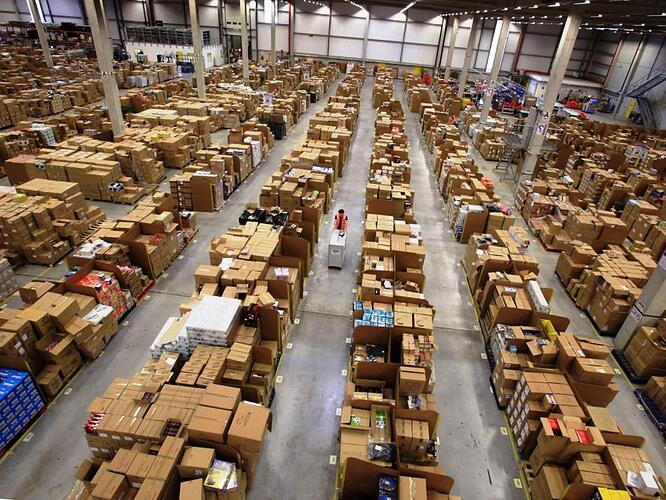
Evacuating the night shift at the Elektrostal warehouse, where around 8,000 people work at any given time, was a nightmare—and led to high casualties.
In one zone of the logistics center, the alarm did not go off immediately, and security guards searched workers before allowing them to leave, despite the fire and smoke. In another, workers were required to hand over their portable data terminals (smartphones with built-in scanners used to track goods) before they could evacuate. A confrontation broke out. In the same area, the loading gates failed to open automatically, forcing the crowd to escape through a narrow exit fitted with a turnstile, resulting in a stampede.In another area, employees were herded under mezzanines, which are multi-level shelving units filled with goods, and not allowed to leave. A poorly designed safety protocol assumed that the mezzanines would shield workers from the blast. However, the drone strike was so powerful that the shelving and all the boxes stored on it caught fire almost immediately.
Workers fear that Wildberries will take the money used to compensate sellers for their losses straight out of their wallets. The company already regularly docks workers’ pay to cover defective goods. Some order pickers also report being automatically ‘fined’ for orders they were unable to assemble because of the overnight attack.”
[note: While Russian law forbids employers from docking salaries, many achieve this effect by designating workers’ pay above minimum wage as “bonuses,” which they then cut at their discretion; or by misclassifying them as contractors.]
Stripping Workers Down To Their Underwear
Such reports should come as no surprise. Wildberries is notorious for its treatment of workers.
In the summer of 2022, a major scandal erupted when a video revealed workers at a Wildberries sorting center in Sofrino, near Moscow, being stripped down to their underwear. The company claimed the measure was intended to prevent theft, but it felt like something out of a movie about colonial diamond mines.
“When you get to the warehouse, you have to change in the locker room and go through security. The men’s and women’s locker rooms are separate, with male guards in the men’s locker room, and female in the women’s. Some warehouses even put the men’s and women’s locker rooms on different floors.
The company provides your entire uniform. If you buy your own shoes, security has to place a sticker on them on your way in. You might even be required to show a receipt to prove that the shoes belong to you and you didn’t steal them from the warehouse. You can keep your own underwear.
They search you on the way in and the way out. The most aggressive workers get taken to the ‘blackout office’ (its walls are covered with black plastic) and asked to show what’s in their underwear. Sometimes guys from the Caucasus are aggressive, looking to pick a fight.
The security guards in the women’s locker rooms are a lot crueler than their male counterparts. One time, one of the workers couldn’t open her locker and asked a security guard for help. One thing led to another; they stopped short of an argument, but the guard asked for her ID, took a picture of it, and then reported her to management. The woman ended up being fined 5,000 rubles.”
The women strip down to their underwear and bras, and the female guards give their underclothes a tug and run a metal detector between their legs. The women also have to hold their hair in a bun so that the guards can check if they’re wearing earrings.”
A subsequent prosecutor’s investigation confirmed these allegations, and the humiliating procedures were discontinued. But they made a return in 2025. “Oh, great! We’re stripping down to our underwear. Strip at the entrance, carry all our stuff through the turnstile, and get dressed on the other side. Same deal on the way back,” employees reported in chat groups.
Cracks In The Concrete
Of course, the problems go well beyond searches. Wildberries regularly misclassifies employees as contract workers. Put simply, the people generating billions in wealth for Ms. Kim are not entitled to paid vacation, paid sick leave, or an eight-hour workday nor do they accrue a state pension. One employee writes, “I spent more than three months on a 5-on, 2-off schedule working 12-hour days; I’m now on a 2-on, 2-off, 12-hours-a-day schedule. Managers refuse to make me an official employee because it is against company policy.”
Reading on, we learn that “officially, the shift ends at 9 p.m. But in practice, you almost never get off on time. Returns, late deliveries, crowds of customers… and suddenly it’s 10 or even 11 p.m. Overtime goes unpaid. If a delivery arrives in the evening, you have to stay after closing to unpack the boxes, without pay.”
Sadly, that’s not all. The company makes extensive use of paycheck fines—an early capitalist tradition that was abolished by the 1917 revolution but is now making a comeback. “Two months ago, there were no fines at all. Now, I’m getting hit with at least 2,000 rubles a day. On top of that, the rates have been cut for picking, sorting, shelving, and receiving. Every one of us is getting fined.”
Another employee adds, “If one person messes up, everyone gets fined.”
Workers have formed a trade union and begun winning case after case against the company. After they had won over a thousand cases, criminal charges were brought against the union’s leader, Alexander Shvets. Like any self-respecting lawyer would have done, Shvets had been suing Wildberries, representing his coworkers for a fee laid out in a contract. Shvets was accused of not having collected his fee from the other workers.
Shvets was ultimately convicted. The union continues to operate, though its leader remains at risk: if another case is brought against him, his suspended sentence could be converted into actual prison time. More than 11,000 people subscribe to the union’s Telegram channel, which, incidentally, takes a consistent and open left-wing, socialist tone.
As comedy classics Ilf and Petrov once wrote, “The greatest fortunes are all won by the least scrupulous means.” But we must fight fire with fire: the Wildberries workers’ fight for their rights shows that beneath the drab concrete facade of Putin’s system, life still flows. When that concrete finally cracks, we will find a very different country indeed underneath.

Мы намерены продолжать работу, но без вас нам не справиться
Ваша поддержка — это поддержка голосов против преступной войны, развязанной Россией в Украине. Это солидарность с теми, чей труд и политическая судьба нуждаются в огласке, а деятельность — в соратниках. Это выбор социальной и демократической альтернативы поверх государственных границ. И конечно, это помощь конкретным людям, которые работают над нашими материалами и нашей платформой.
Поддерживать нас не опасно. Мы следим за тем, как меняются практики передачи данных и законы, регулирующие финансовые операции. Мы полагаемся на легальные способы, которыми пользуются наши товарищи и коллеги по всему миру, включая Россию, Украину и республику Беларусь.
Мы рассчитываем на вашу поддержку!


To continue our work, we need your help!
Supporting Posle means supporting the voices against the criminal war unleashed by Russia in Ukraine. It is a way to express solidarity with people struggling against censorship, political repression, and social injustice. These activists, journalists, and writers, all those who oppose the criminal Putin’s regime, need new comrades in arms. Supporting us means opting for a social and democratic alternative beyond state borders. Naturally, it also means helping us prepare materials and maintain our online platform.
Donating to Posle is safe. We monitor changes in data transfer practices and Russian financial regulations. We use the same legal methods to transfer money as our comrades and colleagues worldwide, including Russia, Ukraine and Belarus.
We count on your support!
другие тексты


другие подкасты


«Это Базис». Как нас подводит здравый смысл и что об этом говорил Грамши

Политический дневник #47: Война. Мобилизация и сопротивление

«Это Базис»: Профсоюзы. Заучи как дважды два — лишь борьба дает права
SUBSCRIBE
TO POSLE
Get our content first, stay in touch in case we are blocked

Еженедельная рассылка "После"
Получайте наши материалы первыми, оставайтесь на связи на случай блокировки


.svg)

