

НАСТОЯЩИЙ МАТЕРИАЛ (ИНФОРМАЦИЯ) ПРОИЗВЕДЕН, РАСПРОСТРАНЕН И (ИЛИ) НАПРАВЛЕН ИНОСТРАННЫМ АГЕНТОМ ПРОЕКТОМ “ПОСЛЕ”, ЛИБО КАСАЕТСЯ ДЕЯТЕЛЬНОСТИ ИНОСТРАННОГО АГЕНТА ПРОЕКТА “ПОСЛЕ” 18+
War Eating Away At Russia’s Economy
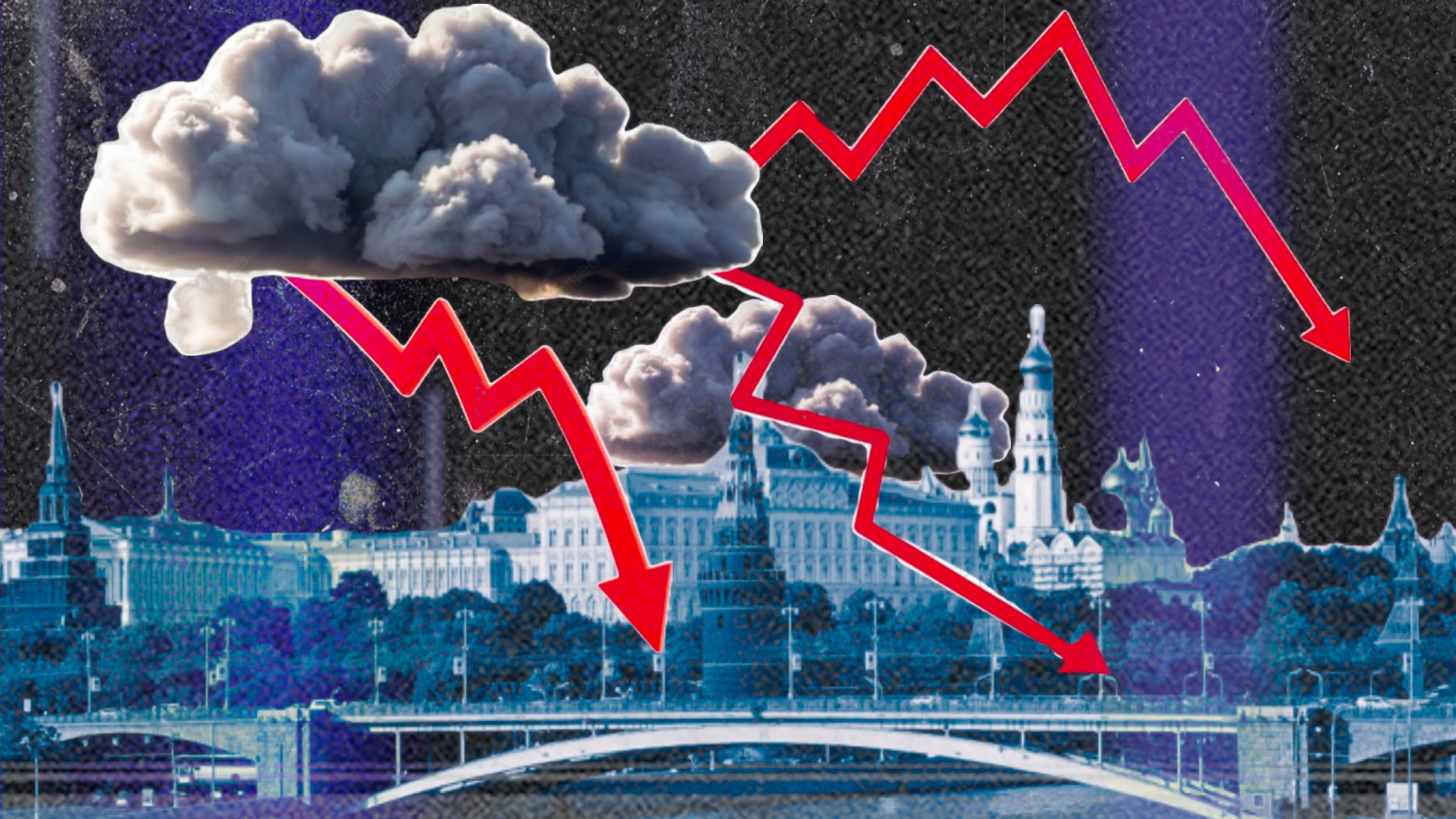
How much have incomes actually fallen in Russia since the start of the full-scale war on Ukraine? Will this drop have any impact on the Russian parliamentary elections in September? Opposition politician Oleg Shein discusses the social crisis that has engulfed the country in the fifth year of the war
In early August, the otherwise listless campaign for the State Duma began to attract some public attention. The reason was the registration of the Yabloko party’s candidate list and the controversy that followed. Yabloko, the only openly antiwar party in Russia, is entering the campaign organizationally weakened to the point of near-collapse. Its leading politicians are either in prison or have been charged with extremist offenses that explicitly bar them from running for office. Its strongest organizations in St. Petersburg, Karelia, and Pskov have been disqualified from elections to local legislatures. The party has no money. An unofficial media blackout has been imposed on it.
Yet the registration of Yabloko’s list, initially approved by the Kremlin, triggered a hysterical reaction among ultrapatriotic forces. The leadership of A Just Russia and Rodina demanded that Yabloko be barred from the election, producing precisely the opposite effect in public opinion. As an old Russian movie put it: “If you don’t like it, that means it’s a good product. You should buy it.”
In every recent election, Yabloko has failed to break 2% of the vote. So what explains all the uproar?
The controversy did not come out of nowhere. Modern Russian history offers plenty of examples of protest voting. In 2018, amid widespread opposition to the pension reform, complete unknowns such as Vladimir Sipyagin effectively defeated four United Russia candidates in gubernatorial races and won a respectable 20–30% of the vote in another two dozen regions.
In 2024, Boris Nadezhdin, little known to the broader public at the time, swept through the Kremlin administration’s rear lines like a grass fire, rapidly establishing campaign offices in dozens of regions and collecting genuine signatures from thousands of Russians who stood outside in the freezing cold to put their names on his petition. His support broke through the 10% threshold in the polls. After Nadezhdin was barred from the race, Vladislav Davankov of the New People party moved into second place. He, too, had been relatively unfamiliar to the public, although the official results assigned him a far more modest share of the vote.
Across polls of every kind, from the state-run VTsIOM to the pro-Kremlin Tsargrad, the share of Russians categorically opposed to the war has never fallen below 20–25%.
Not all of them will go to the polls. But for those who do, the names on the ballot may ultimately matter very little. People barely knew Sipyagin or Nadezhdin either. What matters to them is the position itself, the knowledge that, personally, they cast a vote against the war.
That is why Yabloko’s polling numbers surged after its registration, reaching 9.3% and showing potential for further growth. Of course, the authorities could have simply fabricated whatever figures they wanted on election day without having to fear protests. But the aftertaste would have been too bitter. So, a week after registering Yabloko, they removed the party from the ballot. That same day, its popular lawmaker Lev Shlosberg was sentenced to 12 years in prison for “discrediting the army.”
Cut, brothers, cut
In February 2022, the Russian internet exploded with patriotic outbursts. For people who did not watch television or get their information from right-wing social media channels, those outbursts were difficult to understand. But a substantial part of the population genuinely came to believe that the country was on the rise and that living standards in Russia would improve significantly. The narrative included everything from “Europe is buying Russian raw materials on the cheap” and “With Chubais gone, the oligarchs will finally be brought to heel” to “We’ll trade in rubles” and even “Investing in military production will boost the economy.”
Set aside the gasoline crisis, internet shutdowns, and burned-down Wildberries warehouses. Instead, let’s look at what has happened to the budget and to household incomes. Vladimir Putin has repeatedly invoked, almost like a mantra, the claim that government revenues have remained stable and that nothing has fundamentally changed since the war began. The government, for its part, claims that the country has not seen income growth on this scale since the early 2000s.
Meanwhile, the increase in incomes that was genuinely recorded during the early years of the war has not merely stopped. It has been replaced by a decline.
So what does the budget look like in the fifth year of the war?
We will compare the 2021 budget with the 2026 budget law.
The first thing that stands out is the increase in spending on “Defense” and “National Security.” Before the war, these categories already accounted for a substantial quarter of federal spending. This year, they are projected to make up 37%.
In reality, the share devoted to the security and military apparatus is considerably higher. War-related spending is scattered throughout the budget, including under categories that appear entirely civilian. For example, purchases of tracked vehicles worth 1 trillion rubles ($12 billion) were classified under housing and utilities. Military hospitals were included under Health Care. And under “Social Policy,” benefits for disabled children and cancer patients now sit alongside funeral payments to the wives of soldiers taking part in the so-called “special military operation.”
If military spending has increased, what has been cut?
The share of spending that goes to the National Economy has fallen from 17.6% to 10.8%. That amounts to a reduction of 3 trillion rubles a year, money that previously went toward subsidized loans for factories and farmers, infrastructure modernization, and leasing programs to purchase advanced machinery and equipment. Those trillions now go toward drones and multiple-launch rocket systems.
The share of spending on social policy, including transfers to the Pension Fund, has fallen from 27% to 16% of the federal budget. Spending on health care has dropped from 6% to 4%, and education from 4.5% to 3.8%.
This part requires a closer look, and we will begin with pensioners.
The blow to pensioners came three years before the war, when preparations for it were still being conducted in secret. In the summer of 2018, Vladimir Putin abandoned his own promises not to raise the retirement age and announced a reform that would increase it by five years on an accelerated schedule. Russia responded with mass protests. Independent trade unions affiliated with the Confederation of Labor of Russia played a major role. Rallies and demonstrations swept across the country, involving more than half a million people, but they had no effect.
It soon became clear that the money saved at the expense of pensioners was being spent by the Kremlin on weapons. Social-policy spending, including transfers to the Pension Fund, fell by more than 2.5 percent from 2019 to 2021. Over the same period, spending on the military and security services rose 28%, from 5.421 trillion to 6.940 trillion rubles.
Naturally, the trend only accelerated after the invasion of Ukraine began. It was the incomes of pensioners, doctors, and teachers that became the fuel Vladimir Putin burned to keep the war machine running. The authorities did not directly cut pensions and salaries, but they had no need to. Amid accelerating inflation, it was enough to claim that the actual increase in prices was much smaller than it actually was and then adjust annual benefits and salaries according to that understated figure.
A telling, if indirect, indication of the statistical manipulation is the Central Bank’s key interest rate. By mid-summer 2026, for example, the key rate stood above 14%, while the officially reported rate of inflation was 4.5%.
The result has been a genuine catastrophe for pensioners’ incomes. Before the pension reform, the average pension was equivalent to 32% of the average wage. By the beginning of the war, that figure had fallen to 30%. After four years of the “special military operation,” it had plunged to 23.8%. In other words, upon retirement, a worker has to learn how to stretch what used to be a week’s wages over an entire month. In 2024, pensions fell even further behind the official rate of inflation. One reason was the scaling back of government transfers to the Pension Fund: during the war years, the share of the fund’s revenues coming from the federal budget fell threefold, from 25% to 8%.
Less dramatically, but still significantly, the incomes of workers in health care, education, and science have also declined. In 2012, Vladimir Putin announced an ambitious program to raise the salaries of doctors, teachers, and scientists, declaring that their pay should match, or even substantially exceed, wages in industry. The targets he set were never achieved, and after the start of the “special military operation,” the situation began visibly deteriorating.
In 2021, teachers’ salaries were equivalent to 79% of the national average. By 2026, that figure had fallen to 69%. The ratio of scientists’ and researchers’ salaries to average wages across the economy fell from 117% to 107.6%. Doctors’ salaries, which in 2021 stood at 158% of the official national average, had fallen to 98% five years later. There are, of course, serious questions about Russia’s official wage statistics, but in this case, it is the trend that matters.
Let’s return to the changing structure of the budget. Another development deserves attention: the cut in assistance to the regions. The share of such spending in the federal budget has fallen from 4.4% to 3%.
This matters because the regions are responsible for funding schools, clinics, the overwhelming majority of hospitals, and local infrastructure. Moreover, regional budgets rely heavily on the volatile corporate income tax, which creates an extremely uneven picture of prosperity or decline during wartime. While revenues were growing in Moscow, the budget of the oil-and-gas-producing Astrakhan region contracted by 16% in real terms, and that of the coal-producing Kemerovo region shrank by as much as 40%.
As a result, whereas 21 of Russia’s 85 regions ran budget deficits in 2021, by 2026 that number had risen to 56, including the occupied territories of Crimea and Sevastopol. Governors are being forced to cut spending on road repairs and abandon school renovations not simply because revenues are falling. The Kremlin has also shifted part of the cost of the war onto the regions. Local budgets now cover a substantial portion of payments for military contracts, combat injuries, and compensation to the families of soldiers killed in the war.
The sums involved are substantial. In the Astrakhan region alone, such expenditures have reached 6% of the region’s own revenues, and the situation is evidently similar elsewhere across the federation.
Behind all these figures lies more than a mere shift in priorities. Even using the official inflation rate, which should itself be regarded as seriously understated, real spending on health care has fallen by 14% during the war, aid to the regions by 20%, and spending on the national economy and social policy by 25%.
These are the figures contained in the government’s own report attached to the 2026 budget proposal. How does all of this affect the population?
Less clothing, less food
The sanctions imposed on Russia after the war began drove Western goods off store shelves, replacing them with Chinese products. China’s share of Russian imports rose from 25% to 38% after the start of the war. Taking advantage of its position, China raised the prices of its goods by 87% during the first three years, compared with a 9% increase in prices for goods it supplied to Azerbaijan.
One factor that helped contain inflation was the strengthening of the ruble. In the first weeks of the war, the national currency collapsed, but it soon recovered and held onto its gains. The reason for this unexpected good fortune was that capital flight from Russia was blocked, transactions in dollars and euros were restricted, and demand for foreign currency fell sharply.
For the federal budget, this had negative consequences: exporters needed fewer rubles for every dollar they earned, and tax revenues collected from them declined accordingly.
On the other hand, the stronger ruble helped contain inflation and stabilize household incomes. To understand how important the exchange rate is to ordinary Russians, consider that before the war imports accounted for 19% of food, 29% of household appliances such as televisions, refrigerators, and washing machines, 47% of furniture, and 74% of computers and smartphones.
Massive government spending on the war also played a role. Military enlistment contracts alone generate as much as 3 trillion rubles in annual payments, equivalent to 1.5% of the country’s GDP. Military factories ramped up production. Through the personal consumption of those receiving these payments, the money flowed through the wider economy, driving income growth in civilian manufacturing, small businesses, and the service sector.
During the first two years of the war, average household incomes did indeed rise. And it was not just rentiers who benefited. Wages as a share of GDP increased from 39% to 48%, returning to roughly the level seen in 2013. An indirect indicator was also the increase in contributions to the Pension Fund, which are essentially payroll taxes.
However, the gains were extremely uneven across industries and social groups. Surveys show that the composition of the consumer basket has not changed. Food continues to account for a consistently large share of household expenditure, holding steady at 32%. In 2025, the average Russian household had savings of 30,000 rubles, or about $400, while the share of disposable income left after paying for food, housing, utilities, transportation, clothing, etc. actually fell from 30% to 16% between 2023 and 2025.
In other words, the growth in real wages in the defense sector was offset by the decline described above in health care, education, and utilities.
But starting in 2024, even this picture began to deteriorate. By 2025, the trend had reversed, turning into a precipitous decline in living standards.
Furniture sales plunged 20% last year. Smartphone sales had already fallen by 3–4% in 2024, and by the third quarter of 2025, the decline had reached 26% in units sold and 29% in monetary terms. Clothing and footwear sales fell 7%. For the first time in 15 years, even food sales declined. In other words, people began cutting back even on food last year: food sales by volume fell 5% over the course of the year.
The decline continued in 2026. During the first half of the year, visits to cafes and restaurants fell by 10%. Sales of major household appliances such as washing machines and dishwashers fell by as much as 30% compared with the already poor previous year. Visits to grocery stores dropped 10%, while traffic at alcohol retailers fell by a full 14%.
Against a backdrop of crushing inflation, an overwhelming majority of Russians have begun cutting back on food. In 2025, 47% were already doing so; this year, another 34% joined them. In other words, four out of five Russians are now going without food purchases they would otherwise make. It is not only delicacies that have been pushed aside, but also chips, chocolate, and ice cream.
The share of people cutting back on clothing was 54% last year. In the first six months of this year, it surged to 82%, an increase of half. One in seven respondents has stopped buying clothes altogether because such goods have effectively become luxury items.
In terms of life expectancy, Russia, according to World Bank estimates, slipped from 109th place in the world in 2019 to 114th in 2024.
The spike in gasoline prices caused by the shutdown of oil refineries in the summer of 2026 will presumably deepen this process even further.
In the absence of protest
All of this, of course, cannot help but affect political attitudes in Russian society.
The war divided Russian society more deeply than any election ever had. As early as June 2023, the Telegram channel Nezygar, which reflects the position of the Presidential Administration’s Domestic Policy Directorate, reported that only 8–12% of respondents actively supported the war. “The rest are indifferent.” More than 74% of people under 30, moreover, were strongly opposed to the war in Ukraine. Nezygar cited a closed poll conducted by the Federal Agency for Government Communications and Information, which is controlled by the FSB.
By October 2023, as many as 44% of respondents said the “special military operation” should never have been launched in the first place. The share of those who justified the start of hostilities had fallen from 54% to 45%. From that point onward, the number of people favoring peace negotiations consistently exceeded the number supporting a continuation of the war.
These sentiments became most visible in what appeared to be the tightly controlled Russian presidential election of March 2024. Alongside the thoroughly system-aligned candidates from the parliamentary opposition, Boris Nadezhdin, a former State Duma deputy and liberal politician with little name recognition, entered the race.
Nadezhdin explicitly called for an end to the war. Within a couple of weeks, news of his candidacy had spread across the country like a grass fire. Dozens of regional campaign offices sprang up, and on cold winter evenings, people lined up for hours to sign petitions in support of his candidacy. Within three weeks, Nadezhdin’s polling numbers had climbed above 10%, twice the ratings of any candidate from the official opposition.
Despite successfully collecting the required 100,000 signatures, he was, predictably, not allowed to run. After that, support from the antiwar electorate shifted toward Vladislav Davankov, the candidate of the parliamentary New People party. Davankov said nothing about the war, and that silence was interpreted as an eloquent form of dissent. His polling numbers reached 10–12%, after which the election results awarded him just 3.85%.
Davankov did not protest, but during these years New People became the only party to consistently advocate easing the country’s repressive practices.
Once real wages began to decline, Putin’s approval rating quickly began to slide. It stood at 38.1% in the summer of 2025 but had to 29.5%, by April 2026. VTsIOM then stopped publishing the relevant polling data.
United Russia’s rating also fell below the combined ratings of the parliamentary opposition, 32.7% versus 37.5%, a level not seen since 2011. New People regularly comes in second, while A Just Russia, which has become a mouthpiece for the war and repression, hovers around 5%. The political class’s nervousness over the prospect of some voters supporting Yabloko makes the picture even more striking.
That said, Putin’s popularity should not be exaggerated even in earlier years. The Wagner mercenary revolt in 2023 shone a spotlight on the authorities’ complete lack of popular support. People either welcomed the fighters with open arms or watched the events with detached indifference. No one took to the streets in support of Putin that day. The only exceptions were perhaps the three “community activists” who, on orders from the Presidential Administration, appeared on television in every region.
Still, it is important to understand that, in practical terms, none of the data cited above means much. Unlike in 2011, the parliamentary opposition has no politicians actually fighting for power. Not a single candidate running for parliament on its behalf will take to the streets. There is no corps of election observers—the force that became the backbone of mass protests against electoral fraud in those earlier years. Rallies are banned. Navalny has been killed. Opposition leaders are either in prison or in exile. In Bashkortostan alone, for example, dozens of active participants in environmental protests have been sent to prison. On-line electronic voting makes it possible to produce virtually any official result.
So the election will unfold exactly as it is scripted in the Old Square [the seat of Presidential Administration], and there will be no unrest afterward.
A bleak outlook in sight
Russia's fiscal outlook is plainly grim. The country's budget has always rested on a combination of low taxes, profits from raw-material exports, and restrained social spending. Oil and gas revenues were funneled into the Reserve Fund, which allowed the government to avoid major shortfalls in difficult times.
The war has eaten through the Reserve Fund. In 2021, the fund's liquid assets amounted to 7.5% of GDP. By the summer of 2026, they had shrunk to 1.5%. At that level, the Reserve Fund can no longer be tapped for ordinary government needs. What remains is a relatively small sum intended exclusively for emergencies.
Oil and gas revenues have collapsed. Russia has lost its premium European market, while China is not only buying less but paying prices roughly 40% below what the European Union used to pay. As a result, the share of oil and gas revenues in the federal budget fell from 35.8% to 22.7% between 2021 and 2025. And in the summer of 2026, following Ukrainian strikes, Russia began importing gasoline from India, Belarus, and Kazakhstan.
Russian government economists are looking to the future with grim apprehension. Six months ago, the cabinet published a fiscal forecast extending to 2042. It projects a further decline in oil and gas revenues, partly because fields are being depleted and sales are becoming less profitable. As a share of GDP, oil and gas revenues are expected to fall from 4.0% in 2025 to 1.9% in 2042.
Non-oil and gas revenues are also expected to decline, from 13.1% of GDP to 12.2%. As a result, government spending will have to be cut by roughly one-seventh. It is as if a worker were told, at the end of the year, that they would no longer be paid for seven weeks of work.
And even that will not be enough to balance the budget. Spending will continue to exceed revenues throughout the entire period. In other words, Russia faces 16 consecutive years of budget deficits.
The deficits will be financed in part through higher government borrowing, with public debt expected to double from 17.7% of GDP in 2025 to 32.2% in 2042. Debt-service costs will double as well, rising from 7.6% of the budget today to 15%. To put that in perspective, that is more than the government currently spends on education, pensions, and health care combined.
Social spending, investment in housing, utilities, and roads, and support for domestic production will have to give way. Alternatively, military spending would have to be cut roughly in half.
And this is the baseline scenario — the optimistic one. There is also a conservative, or pessimistic, scenario in which the fiscal picture is worse and public debt triples.
In theory, the Kremlin could increase the tax burden on the country's wealthiest 1%. Among developed economies, Russia has long been a textbook example of a neoliberal approach to fiscal policy. On the eve of the war, the country's tax burden was 10 percentage points below the OECD average, amounting to 32–33% of GDP.
The demands of wartime spending have forced the government to partially abandon that approach. The corporate profit tax was raised from 20% to 25%. A progressive personal income tax was introduced, with a top rate of 22%.
But all of these measures have been largely offset by sweeping tax breaks, whose primary beneficiaries have been large corporations and wealthy capital owners. In 2021, these benefits, officially classified as “tax expenditures,” amounted to 4.5 trillion rubles, or 3.4% of GDP. Under the 2026 budget law, they will amount to 15.8 trillion rubles, or 7% of GDP.
It is hardly surprising, then, that Russia's Forbes billionaires have more than recovered their losses from the sanctions, with their fortunes growing at a remarkable pace.
For ordinary Russians, for working people, the country's ruling political system offers no future other than hardship, poverty, and hopelessness. The golden age of oil and gas abundance was squandered on military exercises, yachts, vaults full of gold bars, and the Sochi Olympics. The incomes of ordinary Russians, who also benefited from a share of the country's oil wealth, peaked in 2014 and then began to decline.
Now it is clear that there is no end in sight to that decline.
There is an old joke: Vladimir Putin will return Russia to exactly the condition in which he found it. Minus the commission.

Мы намерены продолжать работу, но без вас нам не справиться
Ваша поддержка — это поддержка голосов против преступной войны, развязанной Россией в Украине. Это солидарность с теми, чей труд и политическая судьба нуждаются в огласке, а деятельность — в соратниках. Это выбор социальной и демократической альтернативы поверх государственных границ. И конечно, это помощь конкретным людям, которые работают над нашими материалами и нашей платформой.
Поддерживать нас не опасно. Мы следим за тем, как меняются практики передачи данных и законы, регулирующие финансовые операции. Мы полагаемся на легальные способы, которыми пользуются наши товарищи и коллеги по всему миру, включая Россию, Украину и республику Беларусь.
Мы рассчитываем на вашу поддержку!


To continue our work, we need your help!
Supporting Posle means supporting the voices against the criminal war unleashed by Russia in Ukraine. It is a way to express solidarity with people struggling against censorship, political repression, and social injustice. These activists, journalists, and writers, all those who oppose the criminal Putin’s regime, need new comrades in arms. Supporting us means opting for a social and democratic alternative beyond state borders. Naturally, it also means helping us prepare materials and maintain our online platform.
Donating to Posle is safe. We monitor changes in data transfer practices and Russian financial regulations. We use the same legal methods to transfer money as our comrades and colleagues worldwide, including Russia, Ukraine and Belarus.
We count on your support!
другие тексты


.webp)


SUBSCRIBE
TO POSLE
Get our content first, stay in touch in case we are blocked

Еженедельная рассылка "После"
Получайте наши материалы первыми, оставайтесь на связи на случай блокировки


.svg)

